The Best Odds for Seeing Whales from Húsavík Harbour
Húsavík whale watching success rates peak in midsummer when humpbacks dominate the fjord, but the month you visit changes the species you are likely to see.
What the 99% Sighting Stat Does Not Tell You
Why The Headline Number Misleads
Húsavík markets itself as the Whale Capital of Iceland, and the numbers back it. The reported summer success rate sits between 97 and 99 percent. Almost every boat sees something. That statistic conceals a more useful truth: what you see changes drastically by month. A June departure that delivers a blue whale encounter looks nothing like an October trip that logs harbour porpoises and a distant minke. Booking blind on reputation alone is a mistake. Booking on species timing is the only rational move.
The Bay That Fuels It All
The bay that makes this possible is Skjálfandi Bay, a 65° Arctic water body in northeast Iceland where nutrient-rich glacial river outflow meets warm Atlantic currents. That collision produces plankton blooms dense enough to support eleven recorded cetacean species. Húsavík itself holds roughly 2,300 residents. The two primary operators, North Sailing, founded in 1995, and Gentle Giants, founded in 2002, run tours from April through October. The question is which month gets you the animal you actually want to see.


- Bay: Skjálfandi Bay, Northeast Iceland (65°N)
- Sighting Success Rate (Summer): 97, 99%
- Season: April to October
- Peak Months: June, July, August
- Primary Operators: North Sailing (founded 1995), Gentle Giants (founded 2002)
- Tour Length: 2.5, 3.5 hours (standard); 1.5, 2 hours (RIB)
- Adult Price Range (Standard): ISK 10,990, 14,990
- Adult Price Range (RIB): ISK 16,990, 19,990
- Cetacean Species Recorded: 11
- Sighting Guarantee: Free return tour if no cetaceans sighted (no cash refund)
The Species Calendar by Month
Humpbacks: Book Peak Summer
Humpback whales appear in Skjálfandi Bay from April through October, but their numbers peak hard in June, July, and August. That is when you see surface activity at the highest frequency: breaching, tail-slapping, and lunging through bait balls. Outside that window, humpbacks are present but less reliably active. If a humpback is your benchmark for a successful trip, go in peak summer and take the tradeoff. The bay is busier. The harbour crowds are real. The midnight sun means you can be on the water at 22:00 without a coat if you are lucky with the wind.
Blue Whales: The Rare June July Bonus
Blue whales are the exception that justifies a specific travel date. They appear only from late May to early July, with June as the reliable peak. A blue whale in Skjálfandi Bay runs 24 to 30 metres long, which makes the standard 13-to-16-metre humpback look modest. The downside is absolute unpredictability: even within June, blue whale encounters are not daily. You can book a tour for the third week of June, get a dramatic breach from a blue, or see nothing but white-beaked dolphins and a distant fin. No operator can guarantee a blue whale. Raise your odds by booking the first morning departure, when the fjord is calmest and the animals are less scattered by boat traffic. First departure also means lower wind. The typical summer range is 5 to 15 knots, but that rises after 11:00.
Minke Whales, Dolphins, And The Shoulder Seasons
Minke whales are present from April to October and are the most reliable encounter outside peak humpback season. At 7 to 10 metres, they are smaller and less theatrical, but they surface frequently and approach boats. White-beaked dolphins run the same calendar and travel in pods, which makes them the species most likely to break the monotony of a flat day. Harbour porpoises are present year-round but most visible from April to October. Fin whales appear occasionally from June to August. Orcas are rare. You are most likely to encounter them in April, May, September, and October, the same months when migratory fish stocks shift. If you are chasing orcas, treat any encounter as a bonus and build your itinerary around humpbacks or minkes instead.
Which Boat Type and Which Departure
Schooner Or RIB: A Hard Tradeoff
The two operators offer different experiences with a concrete tradeoff. North Sailing runs traditional two-masted gaff ketches built from Icelandic oak and larch: the Haukur, Hildur, and Opal. These carry 30 to 50 passengers, move at sail-assisted speed, and produce the least noise disturbance. The downside is slower transit to where the whales are feeding. Gentle Giants runs rigid inflatable boats that carry 12 passengers and fibreglass cruisers. The RIB tours last 1.5 to 2 hours instead of 2.5 to 3.5, and they get you to the bay mouth faster. The tradeoff is exposure. The bay is open to North Atlantic swell, and a RIB at speed in 15-knot wind will soak you even in a flotation suit. Both operators include insulated waterproof full-body coveralls in the ticket price. Use them. Air temperature in summer runs 8 to 15°C. Water temperature runs 6 to 10°C. A 3.5-hour tour on a schooner in drizzle at 9°C is cold with a good coat. It is dangerous without one.
Seasickness And The Electric Option
North Sailing also operates the Andvari, a carbon-neutral electric boat introduced in 2022. If you are prone to seasickness, moderate to high prevalence on this bay, book the electric boat. It runs quieter and with less vibration, which reduces motion sickness triggers in some people. The bay is exposed. Calm inshore near the harbour roughens toward the open bay mouth. Book the first morning departure regardless of operator. The wind is lower, the animals are closer to the surface after feeding overnight, and you get back to harbour before the midday tour queue builds.
_Photo_by_Giles_Laurent.jpg)
What the Sighting Guarantee Actually Means
The Fine Print
Both operators offer a sighting guarantee: if no cetaceans are sighted on your tour, you receive a free ticket for another tour. That ticket is valid indefinitely and non-transferable for cash. The threshold is low. Any cetacean species counts. Harbour porpoises and white-beaked dolphins count. A tour that logs a fin whale at a distance and a minke closer in meets the guarantee even if you wanted humpbacks. The guarantee protects you from a total blank, not from disappointment with the species mix. Plan accordingly.
One Day Only? Here Is Your Move
If you are in Húsavík for only one day, the guarantee does you no good. Book the first departure. If the weather is seriously bad, sustained winds above 20 knots and horizontal rain, skip that day entirely. Use the Whale Museum on the harbour as a rainy-day backup instead of wasting your only window on a tour where sea state reduces both comfort and sightline quality.
Read next
-
 Lake Myvatn
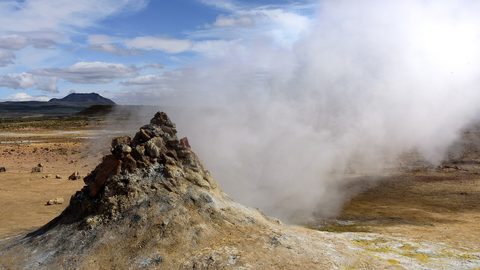
A Mývatn day loop takes you from pseudocraters to boiling mud pots and ends at the geothermal nature baths, with fewer crowds than the Blue Lagoon.
Lake Myvatn
A Mývatn day loop takes you from pseudocraters to boiling mud pots and ends at the geothermal nature baths, with fewer crowds than the Blue Lagoon.
-
 Godafoss
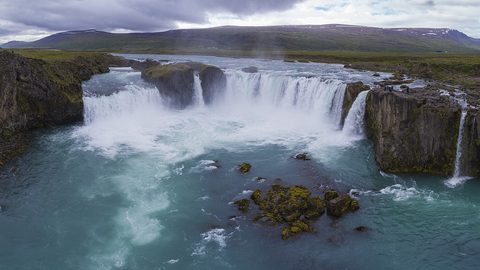
Goðafoss is a wide horseshoe waterfall you can see from both banks in 30 minutes, with a café on the west side and a closer edge on the east.
Godafoss
Goðafoss is a wide horseshoe waterfall you can see from both banks in 30 minutes, with a café on the west side and a closer edge on the east.
-
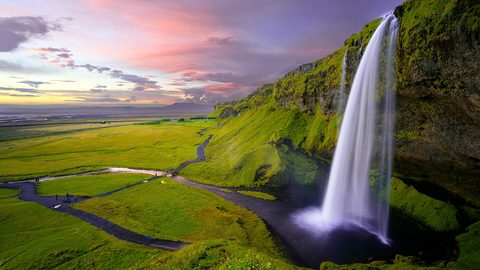 Iceland Travel Guide From One Ring Road to Six Regions
Iceland breaks into six regions and one ring. This guide lays out the geography, the tradeoffs, and how to choose where to spend your limited days.
Iceland Travel Guide From One Ring Road to Six Regions
Iceland breaks into six regions and one ring. This guide lays out the geography, the tradeoffs, and how to choose where to spend your limited days.
-
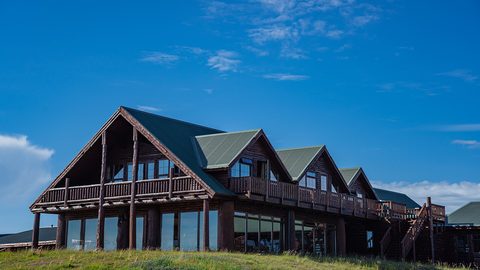 Iceland Accommodation Types from Farm Stays to Hostels
A hotel in rural Iceland rarely means what it means elsewhere. The real differences between guesthouses, farm stays, hostels and campsites before you book.
Iceland Accommodation Types from Farm Stays to Hostels
A hotel in rural Iceland rarely means what it means elsewhere. The real differences between guesthouses, farm stays, hostels and campsites before you book.
-
 Where to Stay in Iceland for a Ring Road Road Trip
On an Iceland lap, the road decides where you sleep. Which bases break the Ring Road into sensible chunks, and where inventory runs dangerously low in July.
Where to Stay in Iceland for a Ring Road Road Trip
On an Iceland lap, the road decides where you sleep. Which bases break the Ring Road into sensible chunks, and where inventory runs dangerously low in July.
-
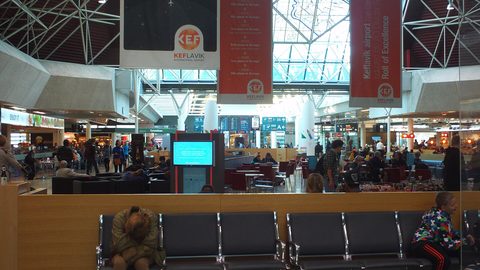 Keflavik Airport Flights Transfers and Iceland Domestic Routes
Keflavík to Reykjavík has no train. Flybus, taxi costs, rental car pickup, and when a domestic flight from Reykjavík City Airport saves a day of driving.
Keflavik Airport Flights Transfers and Iceland Domestic Routes
Keflavík to Reykjavík has no train. Flybus, taxi costs, rental car pickup, and when a domestic flight from Reykjavík City Airport saves a day of driving.
-
 Camping Versus Hotels in Iceland What Two Weeks Really Costs With Numbers
A line-by-line budget pitting a two-week Iceland campervan trip against a guesthouse-and-rental-car trip, with real nightly rates, fuel costs, and food spend.
Camping Versus Hotels in Iceland What Two Weeks Really Costs With Numbers
A line-by-line budget pitting a two-week Iceland campervan trip against a guesthouse-and-rental-car trip, with real nightly rates, fuel costs, and food spend.
-
 Travelling Iceland With Children What Works and the Stops That Genuinely Do Not
Which Icelandic landmarks are unsafe or dull for children, and what a realistic family itinerary replaces them with, from safe waterfalls to Reykjavík rainy-day backups.
Travelling Iceland With Children What Works and the Stops That Genuinely Do Not
Which Icelandic landmarks are unsafe or dull for children, and what a realistic family itinerary replaces them with, from safe waterfalls to Reykjavík rainy-day backups.
-
 Reykjavík Neighbourhoods What 101, Vesturbær and Laugardalur Actually Mean
Reykjavík's postcodes—101, Vesturbær, Laugardalur, Hafnarfjörður—each deliver a different city experience. Here is what your morning walk feels like in each.
Reykjavík Neighbourhoods What 101, Vesturbær and Laugardalur Actually Mean
Reykjavík's postcodes—101, Vesturbær, Laugardalur, Hafnarfjörður—each deliver a different city experience. Here is what your morning walk feels like in each.