The Icelandic Alphabet
Icelandic has four letters English does not, and every road sign uses them. What they sound like, how to type them, and where to go next.
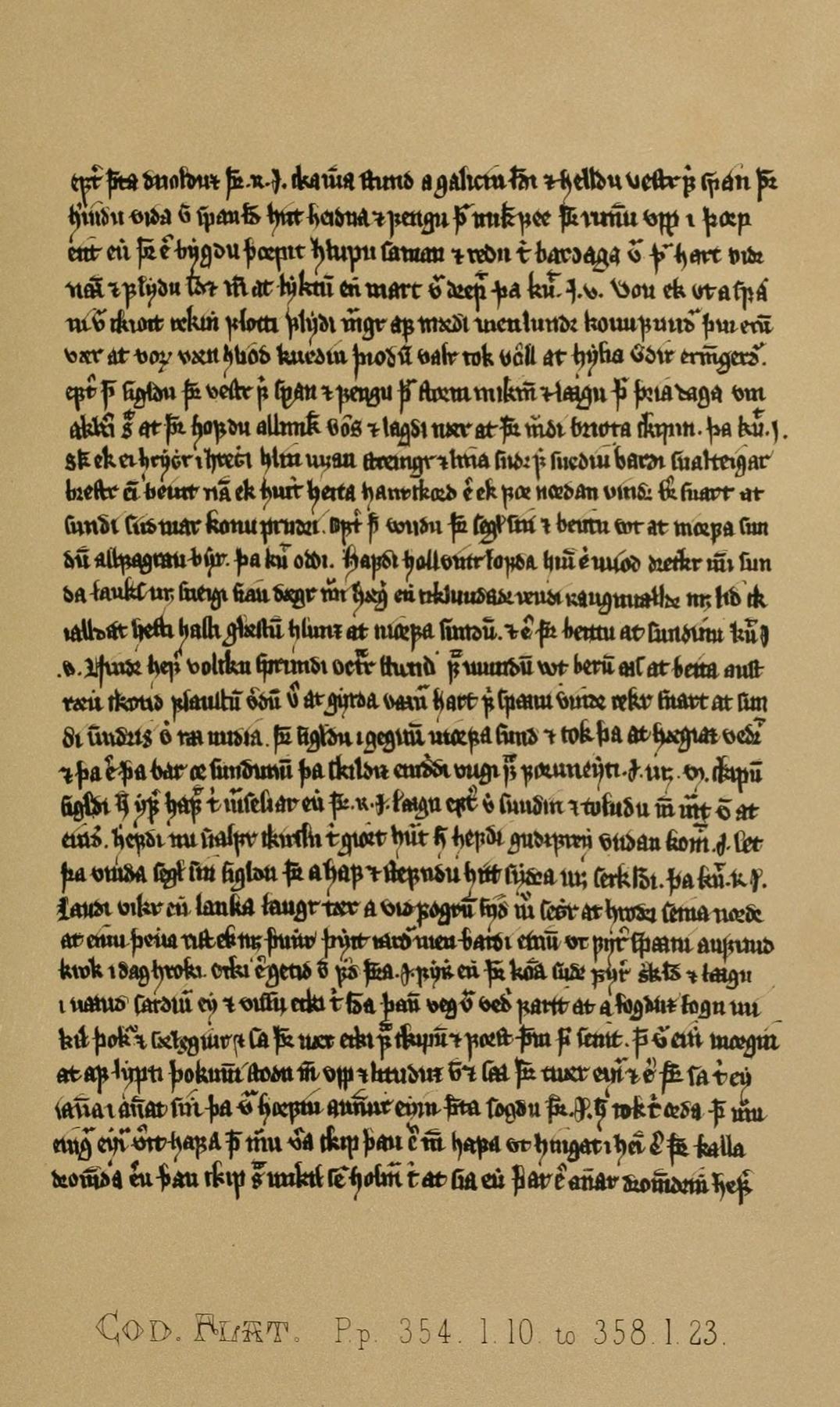

Icelandic uses the Latin alphabet with four letters English does not have, and every road sign, map and menu in the country uses them. The language has changed so little in a thousand years that Icelanders read the medieval sagas without translation - which is charming, and also why the place names are long.
You do not need to speak Icelandic to travel here. You do need to read a place name well enough to ask about it, and to recognise a handful of words on a sign.
Þ and Ð, the two letters English gave up
Þ, þ - thorn. The th of thing, unvoiced. Þingvellir is roughly THING-vet-lir. Icelandic is the only living language still using it; English used it until printers importing type from Germany substituted y, which is where the fake-archaic "ye olde" comes from.
Ð, ð - eth. The th of father, voiced. It never starts a word, which is why you meet it in the middle of Siglufjörður and never at the front.
Æ, æ - pronounced like the English word eye. A single letter, not an a-e ligature.
Ö, ö - the vowel of German schön, close to the u in fur. Höfn comes out near HUPN.
The accented vowels are separate letters
Á, É, Í, Ó, Ú and Ý are not stressed versions of their plain counterparts. They are distinct letters with distinct sounds:
- Á - ow, as in how. Ásbyrgi.
- É - ye, as in yes. Rare.
- Í and Ý - ee. Ísafjörður starts ee, not iss.
- Ó - oh. Þórsmörk.
- Ú - oo. Húsavík.
Getting this wrong is the commonest way a place name becomes unrecognisable to the person you are asking.
The full alphabet, in Icelandic order
Thirty-two letters. The order matters for indexes, phone books and timetables, because the extra letters do not sit where an English speaker expects - Þ and Æ come after Y:
A, Á, B, D, Ð, E, É, F, G, H, I, Í, J, K, L, M, N, O, Ó, P, R, S, T, U, Ú, V, X, Y, Ý, Þ, Æ, Ö
C, Q, W and Z are absent, appearing only in foreign words and names. Z was abolished from Icelandic spelling in 1973, so a Z on a sign means the word is borrowed or the sign is old.

Typing Icelandic on a keyboard that has none of it
On a phone, press and hold the nearest Latin key: t for þ, d for ð, a for æ and á, o for ö and ó, u for ú.
When you cannot type them, the standard substitutions are th for þ, d for ð, ae for æ and o for ö. Icelandic sites and search engines expect this, and it is how the names appear in URLs - so Þórsmörk becomes thorsmork.
Where to go next
The letters are only the first step. Three companion guides cover what you do with them:
- Reading Icelandic place names - the compound system, and the twenty word-parts that decode most of the map. Why Jökulsárlón means what it looks like.
- Icelandic road signs - einbreið brú, blindhæð, malbik endar and the rest of the vocabulary a driver needs before collecting the car.
- Icelandic phrases - what to say, and an honest note on how little you need to.
Common Questions
Do I need to speak Icelandic to travel in Iceland?
No. English is spoken almost universally and signage in tourist areas is bilingual. What is worth learning is how to pronounce place names well enough to ask about them, and the hazard words that appear on road signs in Icelandic only.
How do I pronounce Eyjafjallajökull?
Break it into its parts: Eyja-fjalla-jökull, "island-mountains glacier". Roughly AY-ya-FYAT-la-YUR-kutl. The double-l is close to a tl sound, which is the part non-speakers usually miss.
Why do Icelandic phone books sort by first name?
Because most Icelanders use a patronymic rather than a family name - Jónsson or Jónsdóttir, meaning Jón's son or daughter. Sorting by that would group unrelated people together, so the given name is the useful key.
What does the F in road numbers like F208 mean?
It marks a highland track. F-roads legally require four-wheel drive, are closed for much of the year, and often include unbridged river crossings that rental agreements do not cover.
Read next
-
 Icelandic Place Names: The Word-Parts That Decode the Map
Icelandic place names are compounds that describe the place. Learn twenty word-parts and most of the map explains itself.
Icelandic Place Names: The Word-Parts That Decode the Map
Icelandic place names are compounds that describe the place. Learn twenty word-parts and most of the map explains itself.
-
 Icelandic Road Signs: The Words You Need Before You Drive
Iceland signs its hazards in Icelandic. Six words matter more than the rest, and two of them appear on the Ring Road hourly.
Icelandic Road Signs: The Words You Need Before You Drive
Iceland signs its hazards in Icelandic. Six words matter more than the rest, and two of them appear on the Ring Road hourly.
-
 Icelandic Phrases for Travellers, and When They Actually Help
Everyone in Iceland speaks English, so phrases are courtesy rather than necessity. These are the ones that land well.
Icelandic Phrases for Travellers, and When They Actually Help
Everyone in Iceland speaks English, so phrases are courtesy rather than necessity. These are the ones that land well.
-
 Hotel Glymur Review: A Night at the Head of Hvalfjörður
Hotel Glymur sits at the quiet head of Hvalfjörður near the Glymur trailhead. Here is what a night there is like and who the drive does not suit.
Hotel Glymur Review: A Night at the Head of Hvalfjörður
Hotel Glymur sits at the quiet head of Hvalfjörður near the Glymur trailhead. Here is what a night there is like and who the drive does not suit.