How to Read an Icelandic Place Name
Icelandic place names are compounds that describe the place. Learn twenty word-parts and most of the map explains itself.
.jpg)
Almost every Icelandic place name is a compound built from ordinary words, describing what is there. Once you can read the parts, a name stops being a wall of letters and becomes a description - often a very literal one. Reykjavík is "smoky bay", for the steam the first settlers saw over the hot springs. Vatnajökull is "the water glacier".
This is the single most useful thing to learn before driving here, because it lets you tell from the name alone whether you are heading for a waterfall, a fjord or a glacier tongue.
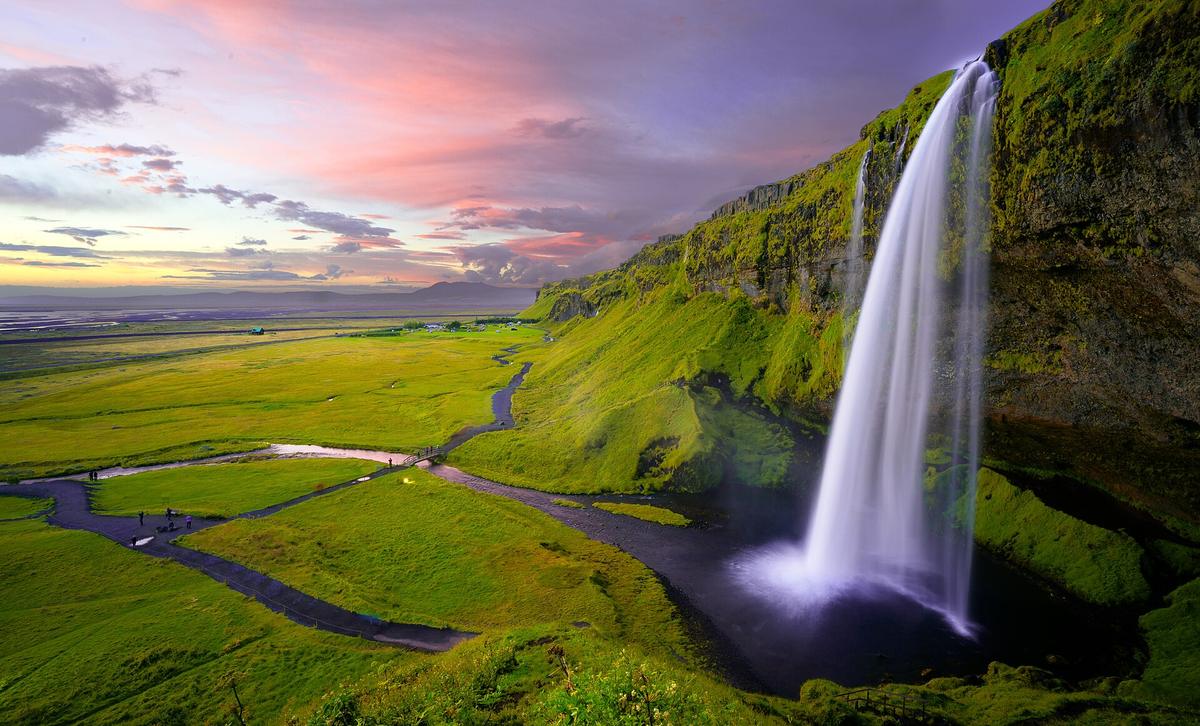
- -foss waterfall - Seljalandsfoss, Goðafoss, Dettifoss, Skógafoss
- -á river - Þjórsá, Jökulsá (glacier river)
- -vatn lake - Mývatn (midge lake), Þingvallavatn
- -lón lagoon - Jökulsárlón, the glacier-river lagoon
- -hver hot spring - Hveragerði, Hverir
- -laug pool, warm bathing water - Landmannalaugar
- -jökull glacier - Vatnajökull, Snæfellsjökull, Eyjafjallajökull
- -fell and -fjall mountain - Kirkjufell (church mountain), Helgafell
- -tindur peak; -heiði moor or heath; -gil ravine
- -hraun lava field - Eldhraun, Berserkjahraun
- -sandur black sand plain - Skeiðarársandur
- -öræfi wilderness, uninhabited interior
- -vík bay - Reykjavík, Húsavík, Vík í Mýrdal
- -fjörður fjord - Ísafjörður, Seyðisfjörður, Hvalfjörður (whale fjord)
- -nes headland or peninsula - Snæfellsnes, Reykjanes
- -eyri gravel spit - Akureyri
- -ey island - Heimaey, Grímsey
- -bær farm or town; -staðir homestead; -holt wooded hill

Eyjafjallajökull = eyja (islands) + fjalla (mountains) + jökull (glacier): the glacier over the mountains by the islands. The islands are the Westman Islands offshore.
Jökulsárlón = jökuls (glacier's) + á (river) + lón (lagoon): the lagoon of the glacier river. The name is the geography.
Kirkjufell = kirkju (church) + fell (mountain). Landmannalaugar = the pools of the land's men.
Names repeat constantly - there are many places called Vík and dozens ending in -foss - which is why Icelanders often add the district: Vík í Mýrdal, not just Vík.
Icelandic is heavily inflected, so the first half of a compound usually appears in the genitive - the possessive form - and that changes its spelling. Jökull (glacier) becomes jökuls- in Jökulsárlón; kirkja (church) becomes kirkju- in Kirkjufell; á (river) becomes ár-. This is why the same word looks slightly different in different names, and why searching for an exact string often fails.
The practical rule: read the end of the name first. The last element tells you what kind of thing it is, and it is the part that does not change.
.jpeg)
There are many places called Vík, dozens of waterfalls ending in -foss, and several Reykjavíks-in-miniature scattered around the coast wherever there was steam. Icelanders disambiguate by adding the district: Vík í Mýrdal is the Vík on the south coast, distinct from every other bay of that name.
Farm names ending in -staðir are usually the oldest layer, often built on a settler's name from the ninth century - Grímsstaðir is Grímur's homestead. A surprising number of these farms are still working farms with the same name a thousand years later.
- reyk- smoke or steam; ís- ice; eld- fire; svart- black; hvít- white; rauð- red
- stór- big; litla- little; ný- new; gamla- old
- norð-, suð-, aust-, vest- - the compass, as in Norðurland (the north country) and Austfirðir (the east fjords)
- hval- whale, sel- seal, arnar- eagle, hafnar- harbour
Put the two halves together and Hvalfjörður is whale fjord, Svartifoss is black waterfall, and Norðurljós - the northern lights - is simply north-light.
Reading the parts tells you what a stop actually is before you drive to it. A name in -jökull means ice and probably a guided trip rather than a walk-up, which is covered in our glacier hikes and ice caves guide. A name in -laug or -hver means bathing water - see hot springs and pools. And the stops along the Ring Road itineraries are largely -foss, -vík and -jökull, in that order.
The letters themselves - þ, ð, æ, ö and the accented vowels - are explained on the Icelandic alphabet page.
Common Questions
Why do so many Icelandic place names end in -foss?
Because foss simply means waterfall, and Iceland has thousands. The first half of the name is what distinguishes them: Skógafoss is the forest waterfall, Goðafoss the waterfall of the gods, Svartifoss the black waterfall for the basalt columns behind it.
Is Vík the same place as Vík í Mýrdal?
Usually yes in a travel context - the village on the south coast is what people mean. But vík just means bay, so the name occurs all round the country, and Icelanders add the district to be precise.
What does Jökulsárlón actually mean?
Glacier-river-lagoon: jökuls (glacier's) + á (river) + lón (lagoon). The name is a literal description of the geography - a lagoon formed where the glacier's river meets the sea.
Do I need the accents when searching for a place?
No. Icelandic sites and search engines accept the ASCII substitutions - th for þ, d for ð, ae for æ, o for ö - and that is how the names appear in URLs anyway.
Read next
-
 Icelandic Road Signs: The Words You Need Before You Drive
Iceland signs its hazards in Icelandic. Six words matter more than the rest, and two of them appear on the Ring Road hourly.
Icelandic Road Signs: The Words You Need Before You Drive
Iceland signs its hazards in Icelandic. Six words matter more than the rest, and two of them appear on the Ring Road hourly.
-
 Icelandic Phrases for Travellers, and When They Actually Help
Everyone in Iceland speaks English, so phrases are courtesy rather than necessity. These are the ones that land well.
Icelandic Phrases for Travellers, and When They Actually Help
Everyone in Iceland speaks English, so phrases are courtesy rather than necessity. These are the ones that land well.
-
 The Icelandic Alphabet: Þ, Ð, Æ, Ö and How to Read Them
Icelandic has four letters English does not, and every road sign uses them. What they sound like, how to type them, and where to go next.
The Icelandic Alphabet: Þ, Ð, Æ, Ö and How to Read Them
Icelandic has four letters English does not, and every road sign uses them. What they sound like, how to type them, and where to go next.
-
 Hotel Glymur Review: A Night at the Head of Hvalfjörður
Hotel Glymur sits at the quiet head of Hvalfjörður near the Glymur trailhead. Here is what a night there is like and who the drive does not suit.
Hotel Glymur Review: A Night at the Head of Hvalfjörður
Hotel Glymur sits at the quiet head of Hvalfjörður near the Glymur trailhead. Here is what a night there is like and who the drive does not suit.