What Determines Whether You Will See the Aurora on an Iceland Trip
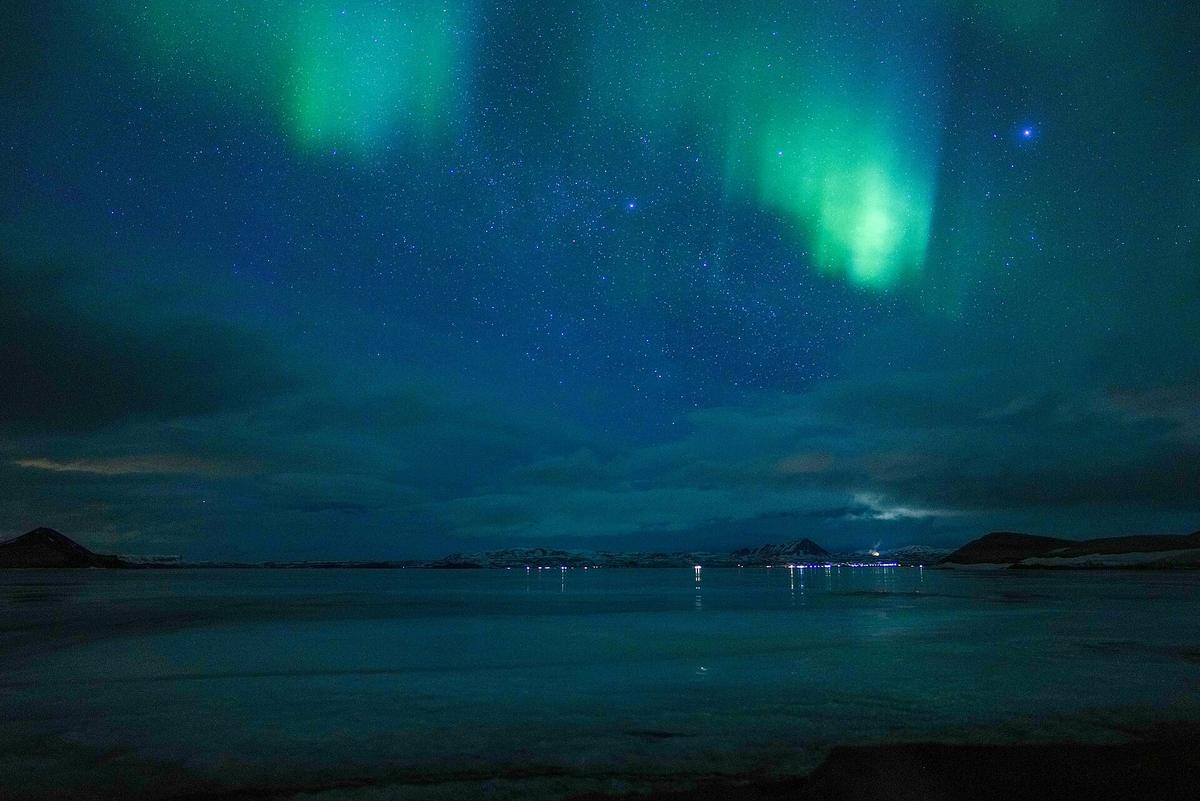
The northern lights in Iceland depend on solar activity, zero cloud cover, and real darkness. Here is how often those three conditions actually overlap, month by month.
_Photo_by_Giles_Laurent.jpg)
The Three Conditions That Actually Matter
Most travel sites sell the northern lights as a box to tick. Book a tour, drive out of Reykjavík, look up, check it off. That framing costs people a lot of money and a lot of disappointment. The aurora is not a destination attraction. It is a natural phenomenon that requires three separate things to happen at the same time: enough solar wind hitting the atmosphere, zero cloud cover where you stand, and true darkness. Miss any one and you see nothing. Even in peak season from September to April, those three conditions align far less often than the marketing suggests. Your job is not to find the lights. Your job is to put yourself in a position where, when the conditions line up, you are ready.
Cloud Cover Is The Real Gatekeeper
The single non-negotiable condition is cloud cover. Solar output can be moderate. The Kp index can be a modest 2 or 3. Under a clear sky in Iceland, that is enough to produce a visible display. But a Kp of 7 behind thick cloud gives you nothing. This is the primary failure cause for visitors, not weak solar output. You can check this yourself in real time using the Iceland Met Office site vedur.is. Open the cloud cover map. White means clear. Green means partly cloudy. Darker green and blue mean overcast. If your location shows anything other than white, the aurora is not happening there that night, regardless of what any app says.
Darkness And The Moon
The second condition is true darkness. Civil twilight is not enough. You need full darkness between the end of civil twilight and the start of dawn. From September through March, that window exists every night. April is borderline. The peak viewing hours run from 21:00 to 02:00 local time. Any tour that picks you up at 20:00 and drops you at midnight covers the core window, but a moonless night helps enormously. A full moon washes out weaker displays. Check the moon phase before you commit to a long drive.
Solar Activity: Lower Is Fine
The third condition is solar output. In Iceland the Kp index only needs to be 2 or higher. That is low by global standards. The island sits far enough north that even moderate solar wind produces visible results. The aurora scale on vedur.is runs from 0 (quiet) to 9 (extreme). Anything above 0 is potentially viewable if the sky is clear and dark. The current solar cycle, Cycle 25, peaks in 2024 and 2025, which improves the odds slightly, but the single biggest variable remains the cloud cover map.
Here is the honest weekly odds breakdown by month. These are rough probabilities for a seven-night trip based on historical cloud cover and solar data, not a guarantee. September: 60 to 70 per cent. October: 70 to 80 per cent. November: 70 to 80 per cent. December: 50 to 60 per cent, with daylight down to four or five hours and frequent storms. January: 40 to 50 per cent, the worst month for cloud persistence. February: 60 to 70 per cent. March: 70 to 80 per cent. April: 50 to 60 per cent, because darkness is shrinking. If cloud cover persists for four or more nights of your trip, the probability drops to 30 to 40 per cent. That happens regularly in winter. Plan for it.
Why High Kp Means Nothing When It is Overcast
A Kp forecast of 6 or 7 appears exciting on every aurora app. If the sky over your location is dark green on the vedur.is cloud map, that Kp number is irrelevant. You are looking at clouds. The inverse is also true. A Kp of 2 on a white map produces a visible aurora, often a green arc or curtain that moves slowly. The best displays in Iceland happen on nights when the forecast showed moderate output and the sky suddenly cleared at 22:30. The people who saw it were the ones watching the cloud map, not the Kp app.
The practical tool for your trip is the vedur.is cloud cover map. Check it at 18:00, then again at 20:00, then again at 22:00. White patches moving toward your location mean a chase window is opening. If you are self-driving, pivot toward the clearest area within two hours of Reykjavík or your accommodation. If you are on a tour, your guide is doing exactly this already. The difference between a good tour and a bad one is whether your guide drives toward the white on the map or sticks to a predetermined stop regardless of conditions.
Tour rebooking policies reflect this uncertainty. Standard policy is a free rebooking valid for one additional night if no aurora is seen. Some operators offer unlimited rebooking within two to three years. Read the terms before you book. If the operator does not have a clear rebooking policy, find another operator. The ones that guarantee nothing are the ones that understand Iceland’s aurora conditions honestly.
How to Read the Cloud Cover Map Yourself
Open vedur.is. Do not use the English mobile version for critical decisions because the map layers load differently. Use the desktop site on your phone browser. Select the cloud cover layer. The colours are intuitive. White means clear sky. Light green means light cloud. Dark green and blue mean thick cloud. If your planned viewing spot is dark green or blue, the aurora is not visible there. Do not drive there.
Chasing The White Patches
Zoom out. If the entire south coast is dark green but a white patch sits over the Westfjords or the northeast, you have a chase option. The distance matters. From Reykjavík to a white patch over the Snæfellsnes Peninsula is about two hours driving. From Reykjavík to a white patch over the Eastfjords is five hours. That is not realistic for a single night. Keep your chase radius to two hours maximum. Anything farther risks the clouds moving in before you arrive or the aurora fading before you set up.
The aurora scale on the same site shows you the likelihood of visible output at your latitude. A reading of 0 or 1 means minimal output. Even under a white sky you may see only a faint glow. A reading of 2 or 3 means a visible display is likely. Above 3 means strong output with colour and movement. Again, this number matters only if the cloud map is white.
Make The Go Or No-Go Call
Combine the two data points before you leave your accommodation. If the scale shows 2 and the cloud map shows white within a two-hour radius, go. If the scale shows 6 and the cloud map shows dark green everywhere, stay inside. The worst outcome is driving two hours to a viewpoint and standing under clouds.
Camera Settings That Work
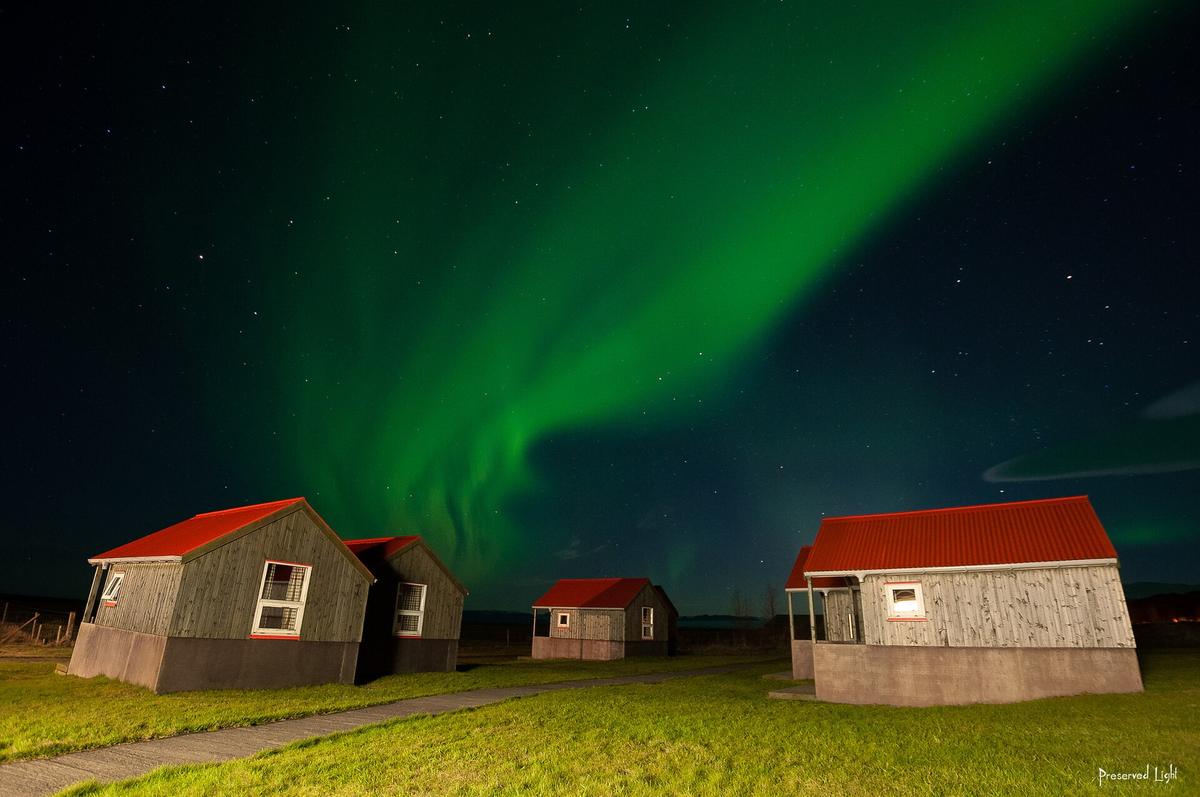
If you are shooting the aurora with a camera, the settings are consistent regardless of the intensity. Use an ISO range of 800 to 3200. Use an aperture of f/2.8 or wider. Use a shutter speed between 5 and 25 seconds. Set focus to manual infinity, then back off slightly. Shoot in RAW. A tripod is mandatory for any exposure longer than 1/30 of a second. These settings give you usable frames even on nights with moderate output. Do not expect magazine quality on your first attempt. Expect green blur and learn from it.
.jpeg)
| Month | Sighting Probability | Primary Risk |
|---|---|---|
| September | 60-70% | Borderline darkness early in month |
| October | 70-80% | Sudden storms rolling in from the Atlantic |
| November | 70-80% | Short daylight, limited chase time |
| December | 50-60% | Persistent overcast, severe wind gusts |
| January | 40-50% | Worst cloud cover, 4-5 hours of daylight |
| February | 60-70% | Improving but still volatile weather |
| March | 70-80% | Reliable darkness, equinox improves solar wind |
| April | 50-60% | Loss of true darkness, trips to high latitudes only |
Common Questions
What Kp index do I actually need to see the aurora in Iceland?
A Kp of 2 is sufficient under a clear, dark sky. Iceland sits at a latitude where even low solar output produces visible displays. A Kp of 6 or 7 makes no difference if clouds are present.
Can I rely on aurora forecast apps instead of vedur.is?
No. Most apps show Kp forecasts without local cloud data. Iceland's weather is too volatile to trust generic forecasts. Use the vedur.is cloud cover map. It is the only source that shows real time conditions for your exact location.
What happens if I book a tour and the sky is overcast?
Most operators offer a free rebooking for one additional night if no aurora is seen. Some offer unlimited rebooking within 2-3 years. Check the policy before booking. If the operator has no rebooking option, book elsewhere.
Is it worth self driving to chase clear sky?
Yes, if you have a 4x4 with studded winter tyres from November through March and you keep your chase radius under two hours. Road closures, ice, and wind gusts over 20 m/s are common October through March. Check road.is before you drive.
Read next
-
 Icelandic Place Names: The Word-Parts That Decode the Map
Icelandic place names are compounds that describe the place. Learn twenty word-parts and most of the map explains itself.
Icelandic Place Names: The Word-Parts That Decode the Map
Icelandic place names are compounds that describe the place. Learn twenty word-parts and most of the map explains itself.
-
 Icelandic Road Signs: The Words You Need Before You Drive
Iceland signs its hazards in Icelandic. Six words matter more than the rest, and two of them appear on the Ring Road hourly.
Icelandic Road Signs: The Words You Need Before You Drive
Iceland signs its hazards in Icelandic. Six words matter more than the rest, and two of them appear on the Ring Road hourly.
-
 Icelandic Phrases for Travellers, and When They Actually Help
Everyone in Iceland speaks English, so phrases are courtesy rather than necessity. These are the ones that land well.
Icelandic Phrases for Travellers, and When They Actually Help
Everyone in Iceland speaks English, so phrases are courtesy rather than necessity. These are the ones that land well.
-
 The Icelandic Alphabet: Þ, Ð, Æ, Ö and How to Read Them
Icelandic has four letters English does not, and every road sign uses them. What they sound like, how to type them, and where to go next.
The Icelandic Alphabet: Þ, Ð, Æ, Ö and How to Read Them
Icelandic has four letters English does not, and every road sign uses them. What they sound like, how to type them, and where to go next.