F-Road Rules, River Crossings, and the Highland Driving Season
Iceland's F-roads lead into the raw interior but come with legal restrictions, river crossings, and a short summer window. What you need to know before pointing a 4x4 inland.
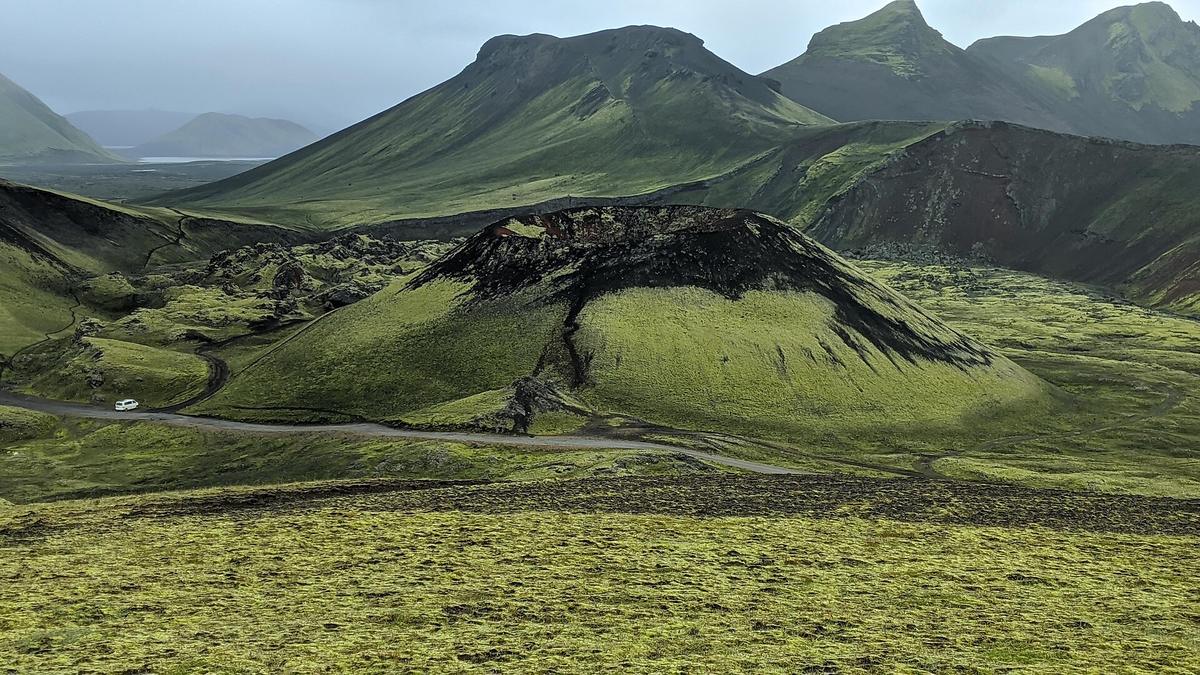

F-Road Rules, River Crossings, and the Highland Driving Season
You cannot drive a two wheel drive car on an F road in Iceland. That is not a suggestion. It is a legal prohibition, and your standard hire car insurance is void the moment you turn onto a gravel track marked with an F. Google Maps will route you onto these roads without warning. Check every route against road.is before you leave the pavement. Only a 4x4 approved by the rental company for F road use is both legal and insured. Drive a two wheel drive or an unapproved 4x4 onto an F road and you accept full financial liability for any damage, including a total loss from a river crossing.
The Legal Line: What Qualifies as an F Road Vehicle
An ordinary SUV with all wheel drive is not automatically approved. Rental companies in Iceland clearly state which models are permitted on F roads. That means a machine with high ground clearance, all terrain tyres, and low ratio gearing. A Suzuki Jimny is a 4x4, but its wheelbase and power make it a poor choice for deep river crossings. A Toyota Land Cruiser or a modified Land Rover Defender handles those same crossings without hesitation. Book a Jimny and the rental agent says it is not approved for F roads? Believe them. Do not argue. You cannot buy insurance for water damage in Iceland. No hire car policy covers it. Ever. Stall mid stream and the interior floods, the car is a total loss and you owe the full replacement value, which can easily exceed five million ISK.
What The Rental Company Tells You
Ask the desk directly: is this car approved for F roads? Get the answer in writing. Many standard 4x4 SUVs from international chains are marked not for mountain roads in the contract. Damage an unapproved machine on an F road and your credit card travel insurance will also deny the claim because the contract was void from the start. The only safe path is a model explicitly listed as an F road approved 4x4 by the rental agency. Expect to pay three to four times the rate of a two wheel drive economy car.
When the Highlands Open and Which Route You Should Take
The highland driving season runs from mid June to mid September. Those dates shift each year based on snowmelt and ground thaw. Some roads open in late May. Others stay closed until late June. Check road.is daily before you depart Reykjavík. The closing window is just as variable: early September to late October, depending on early snow. You have roughly twelve weeks to drive the interior. Plan around that.
Kjölur Versus Sprengisandur
Two main north south highland routes cross the interior. Kjölur (road F35) runs between the glaciers Hofsjökull and Langjökull. It is the easier of the two, with fewer river crossings and shallower water. Most standard F road approved 4x4s manage Kjölur without issue. Sprengisandur (road F26) runs further east, closer to Vatnajökull. It is longer, more remote, and includes deeper river crossings. Only experienced drivers in high clearance trucks should attempt Sprengisandur. Alone in a Jimny? Take Kjölur. Driving a modified super jeep with 80 cm of water clearance? Sprengisandur opens the eastern highlands and Askja.
Access Roads To The Major Highland Bases
Landmannalaugar uses F208 from the north and F225 from the west. Both require river crossings. The bus from Reykjavík runs from late June to early September, route 14 or 14a operated by Reykjavík Excursions. Þórsmörk uses F249 and crosses the Krossá river, which has multiple unbridged channels. The bus runs on route 9 or 9a. Askja uses F88 and F910, with buses from the Mývatn area operated by Mývatn Tours. If you do not trust your river crossing skill, take the bus. It costs less than one recovery.
River Crossing Protocol: Walk It, Gear Down, Commit
The rule is simple and mandatory: wade through the river on foot before you drive across. Park on the bank. Take off your boots or wear waterproof waders. Walk the entire line your wheels will take. Check for submerged boulders, soft sand, and the depth. The limit for a standard F road approved 4x4 hire car is 50 centimetres. For a super jeep it is 80 centimetres. Water above your knee? Do not drive. Turn around or wait for another machine. If you judge it safe, shift into low gear four wheel drive, select a steady throttle, and drive straight through without stopping. Never stop mid stream. That is how water enters the intake and the cabin. If the engine stalls, do not restart. Call 112. Recovery costs run from 100,000 to 500,000 ISK depending on location and severity. If the water rose above the floorboards, the car is a total loss.
What Happens When You Get Stuck
Stuck vehicle recovery in the highlands is expensive and slow. The remote areas have no mobile signal. You call 112, if you have signal, and wait hours for a single recovery truck. The cost scales with remoteness. A simple pull from a ditch near Landmannalaugar might run 150,000 ISK. A helicopter extraction from a deep river on Sprengisandur can exceed 500,000 ISK. Water in the cabin means the rental company declares a total loss. Your credit card insurance, your travel policy, and the rental company's CDW all exclude water damage. You pay the full market value. That is why the single most common mistake in the highlands is driving into a river you did not walk first.
The Seven Day Minimum and One Critical Map
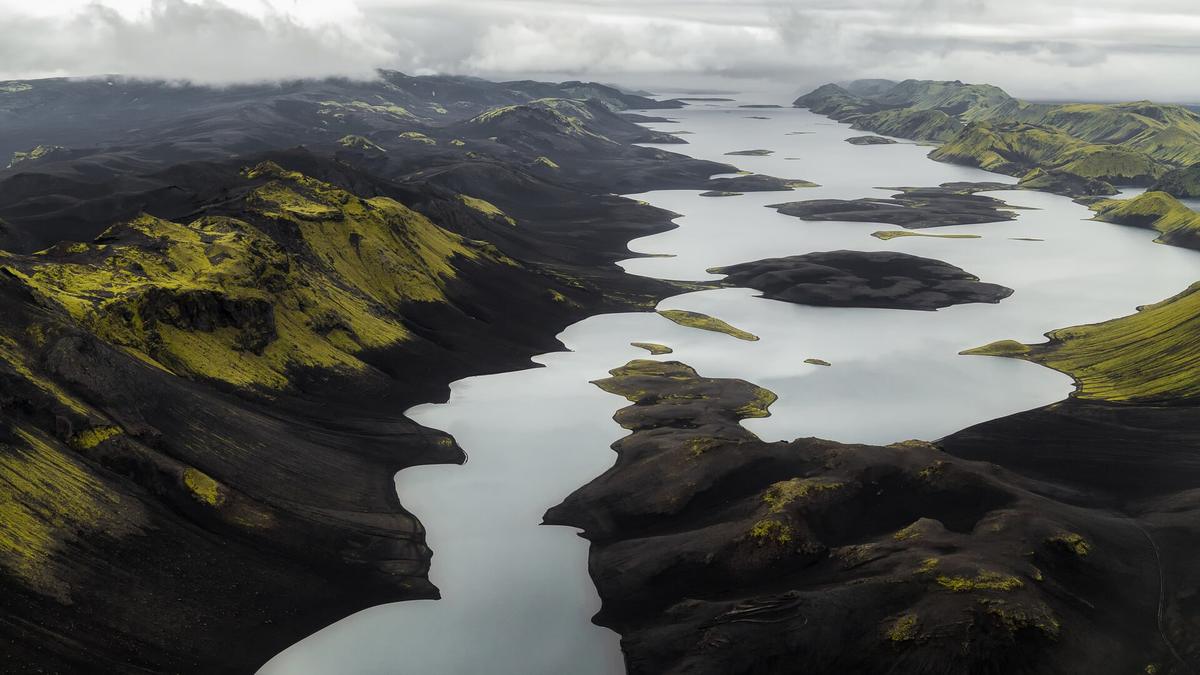
You need at least seven days to see the highlands without exhausting yourself. Any less and you either skip the interior entirely or sprint the Ring Road and miss the detours that make the trip worth the cost. The highlands are not a half day add on. They are a two to three day commitment from Reykjavík. Plan for three nights in the interior if you want Landmannalaugar, Kerlingarfjöll, and one north south crossing. Download offline maps before you leave Reykjavík. Your phone will lose signal for hours at a time in the highlands and the Westfjords. Use road.is and vedur.is together. Weather apps are unreliable. These two government sites give you real time road conditions and wind warnings. If road.is shows an F road as closed or impassable, believe it. Do not try a shortcut.
.jpeg)
| Route | Difficulty | Typical River Depth | Minimum Vehicle Clearance | Opening Window |
|---|---|---|---|---|
| Kjölur F35 | Moderate | 30 40 cm | 50 cm | Mid June to mid September |
| Sprengisandur F26 | Challenging | 40 60 cm | 80 cm | Late June to early September |
| Landmannalaugar F208 | Moderate to challenging | 30 50 cm | 50 cm | Late June to early September |
| Þórsmörk F249 | Challenging | 40 70 cm | 80 cm | Late June to early September |
| Askja F88 | Challenging | 30 50 cm | 50 cm | Late June to early September |
Who This Drive Suits and Who Should Skip it
The highland drive suits solo road trippers, landscape photographers, geology nerds, and travellers who prefer raw nature over urban culture. It does not suit budget backpackers, people who find whiteout conditions stressful, or anyone who needs structured itineraries with indoor attractions. Uncomfortable with the idea of wading through a glacial river in wind that can rip a car door off its hinges? Book the bus instead. The single thing that most often goes wrong: drivers trust Google Maps instead of road.is, turn onto an F road in a two wheel drive car, and face a recovery bill before they reach the first waterfall.
Common Questions
Can I drive a two wheel drive car on an F road for just a few kilometres?
No. It is legally prohibited everywhere on F roads. The rental insurance is void the moment you leave a numbered ring road for an F road. A single kilometre on gravel can damage the undercarriage and leave you liable for the full repair cost.
How deep can I drive through a river in a standard 4x4 hire vehicle?
50 centimetres. That is the confirmed limit for standard F road approved hire vehicles. For modified super jeeps, the limit is 80 centimetres. Exceed that and water enters the intake, the cabin floods, and the car is a total loss.
What if I rent a Suzuki Jimny? Can I take it on Sprengisandur?
Most rental companies do not approve the Jimny for F roads at all. If they do, it is only for graded F roads like Kjölur, not for Sprengisandur or Þórsmörk. The Jimny lacks the power and wheelbase for deep, fast flowing rivers. A Land Cruiser is the minimum for serious crossings.
When exactly do the F roads open each year?
The range is late May to late June for opening and early September to late October for closing. Snowmelt and ground thaw decide the exact date. Check road.is daily from late May. Do not plan a highland trip before mid June or after mid September.
Does my credit card insurance cover damage from a river crossing?
No. Water damage is never covered by any Icelandic hire car insurance. If you stall mid stream and the interior floods, the car is a total loss and you pay the full market value. Recovery alone can cost 100,000 to 500,000 ISK.
What happens if I get stuck in the highlands with no phone signal?
You walk to higher ground or wait for another vehicle. Signal vanishes for hours in the highlands and Westfjords. Download offline maps before you leave. Carry a satellite messenger if you plan deep interior routes. Emergency number is 112.
Is the highland bus a better option than driving myself?
For Landmannalaugar and Þórsmörk, yes. Buses run from Reykjavík from late June to early September. Route 14 or 14a goes to Landmannalaugar. Route 9 or 9a goes to Þórsmörk. You avoid the stress of river crossings and the risk of a total loss. Book ahead in summer.
Read next
-
 Icelandic Place Names: The Word-Parts That Decode the Map
Icelandic place names are compounds that describe the place. Learn twenty word-parts and most of the map explains itself.
Icelandic Place Names: The Word-Parts That Decode the Map
Icelandic place names are compounds that describe the place. Learn twenty word-parts and most of the map explains itself.
-
 Icelandic Road Signs: The Words You Need Before You Drive
Iceland signs its hazards in Icelandic. Six words matter more than the rest, and two of them appear on the Ring Road hourly.
Icelandic Road Signs: The Words You Need Before You Drive
Iceland signs its hazards in Icelandic. Six words matter more than the rest, and two of them appear on the Ring Road hourly.
-
 Icelandic Phrases for Travellers, and When They Actually Help
Everyone in Iceland speaks English, so phrases are courtesy rather than necessity. These are the ones that land well.
Icelandic Phrases for Travellers, and When They Actually Help
Everyone in Iceland speaks English, so phrases are courtesy rather than necessity. These are the ones that land well.
-
 The Icelandic Alphabet: Þ, Ð, Æ, Ö and How to Read Them
Icelandic has four letters English does not, and every road sign uses them. What they sound like, how to type them, and where to go next.
The Icelandic Alphabet: Þ, Ð, Æ, Ö and How to Read Them
Icelandic has four letters English does not, and every road sign uses them. What they sound like, how to type them, and where to go next.