Walking Behind Seljalandsfoss and Finding Gljúfrabúi, the Waterfall in a Canyon
Seljalandsfoss lets you walk behind the cascade, but the real reward is Gljúfrabúi hidden in a canyon cleft next door. Learn the wading route and parking system.

Walking Behind Seljalandsfoss and Finding Gljúfrabúi, the Waterfall in a Canyon
Walk Behind The Main Falls
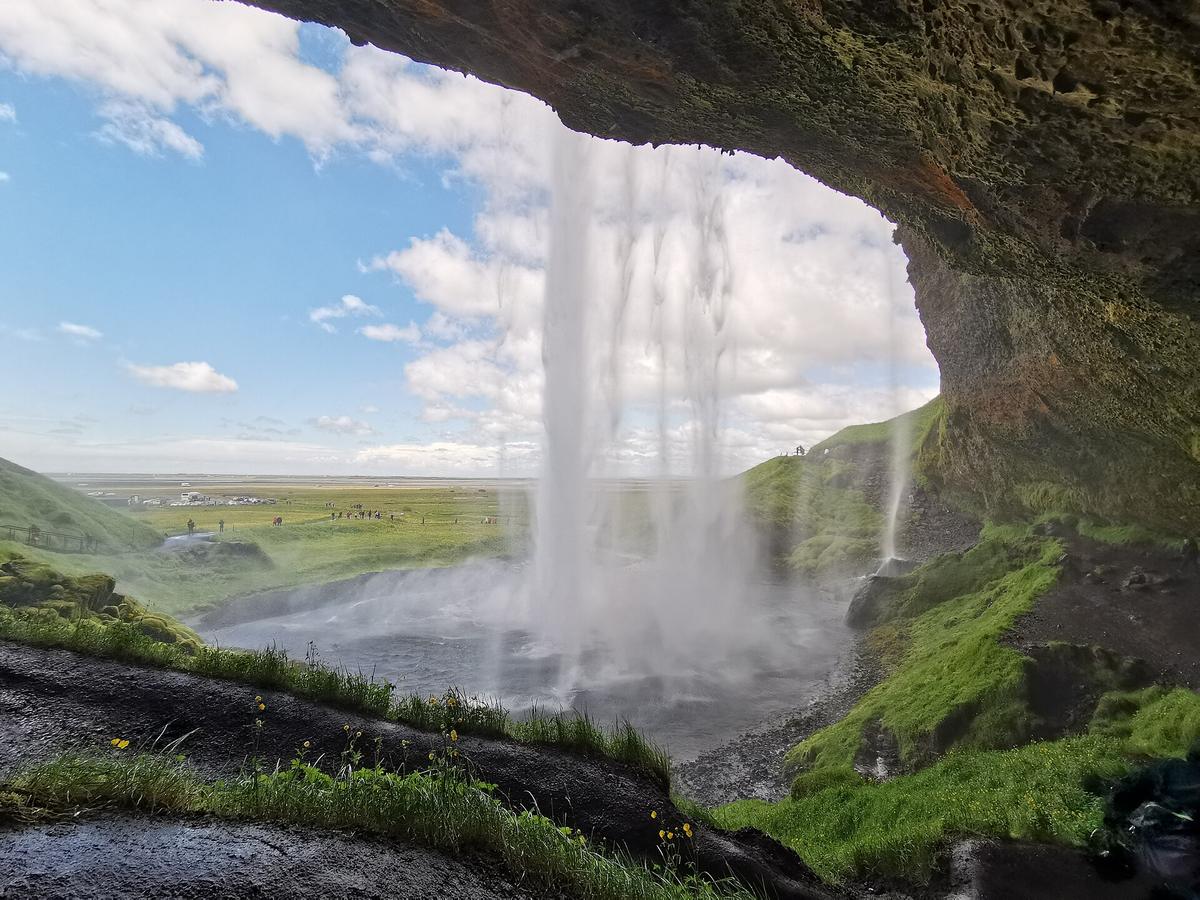
You want to walk behind Seljalandsfoss without getting soaked, and you want to find the hidden waterfall everyone misses. Here is exactly how to do both. Arrive at the parking lot on Þorvaldseyri farm. Pay for a full 24 hours. There is no hourly option. The fee is ISK 900 via card at the pay-and-display machine or the Parka app. Head straight for the path that curves left of the main cascade. That path, 1 to 2 metres wide of compacted gravel and rock, is the walk behind the falls. It opens from April through October, weather permitting. Ice on the cliff face or the path itself triggers closure, and that happens from roughly November through March. Do not attempt it in winter. The spray behind the 65 metre total drop hits hard. Moderate rain is the correct comparison. Waterproof jacket and trousers are the minimum. No poncho does this job.
- Height: 60 m main drop, 65 m including upper cascade
- Walk Behind Path Width: 1, 2 m
- Path Surface: Compacted gravel and rock
- Path Opening Months: April, October (annual, verify before travel)
- Path Closure Trigger: Ice formation on path and cliff face
- Distance to Gljúfrabúi: ~300 m north along marked path
- Gljúfrabúi Access: Wade through shallow stream in a 1, 2 m wide cleft, depth 10, 30 cm
- Parking Fee: ISK 900 for 24 hours (cars, campervans, caravans)
- Payment Method: Pay-and-display machine or Parka app
- Distance from Reykjavík: 128 km via Route 1, ~1 hour 45 minutes
The Gljúfrabúi Slot
Wade Into The Canyon
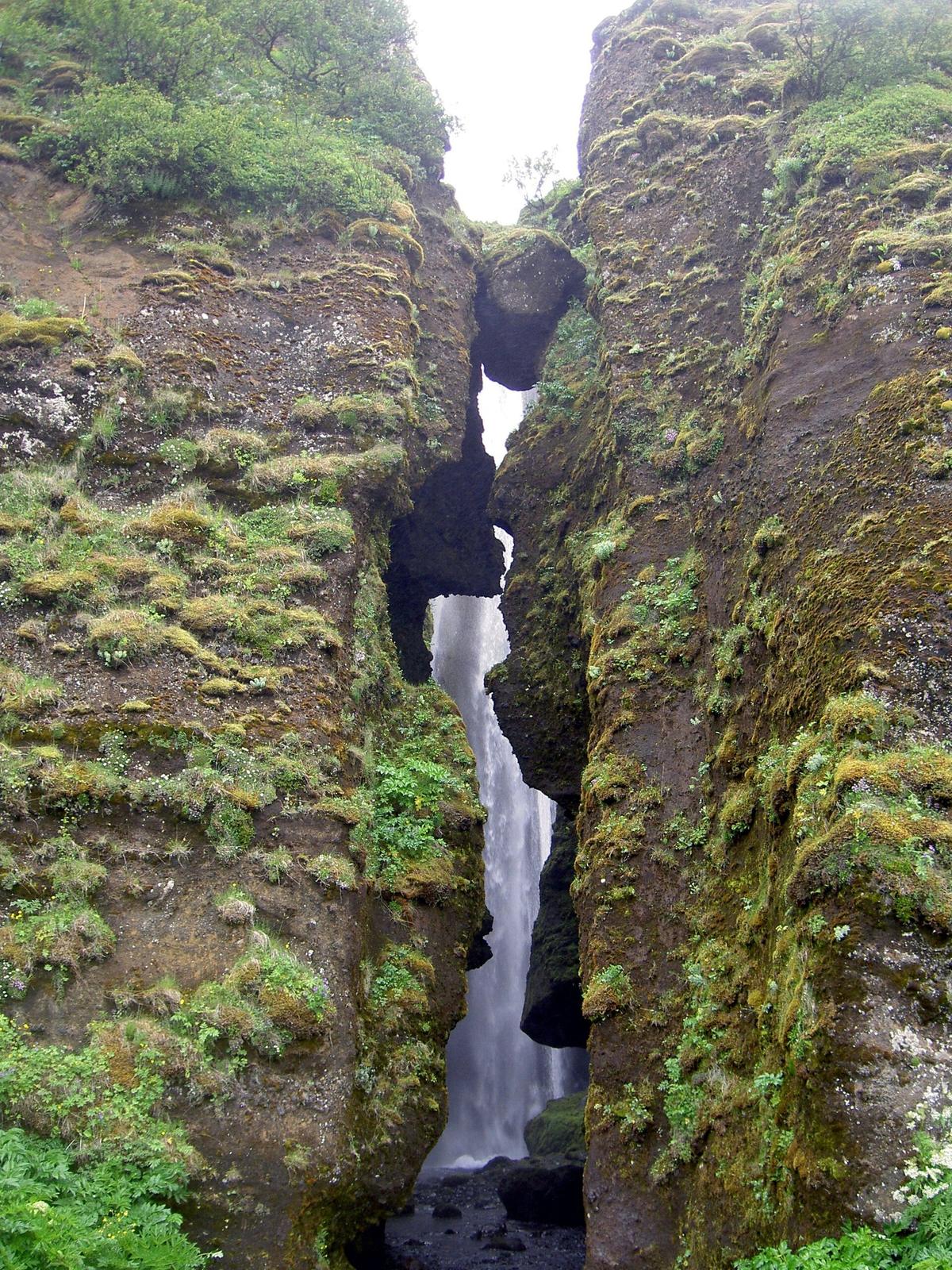
Three hundred metres north of Seljalandsfoss, past the trickle of a smaller fall, the trail brings you to a vertical slit in the cliff. That slit is the only entrance to the canyon waterfall. It is 1 to 2 metres wide, and the floor is a stream. Step in and wade. Depth varies from 10 to 30 cm depending on recent rainfall. The payoff is a 40 metre waterfall dropping into an open topped cavern. Midday light is the photographic jackpot. The sun angles directly into the cleft from overhead, illuminating the moss stained walls. Any other time, the interior is dark and the spray mists your lens. Wade in with your camera in a dry bag or inside a jacket with a hood cinched tight.
Skip The Queue, Not The Falls
Do not skip this waterfall because you saw a queue at the cleft. The slot admits one person at a time, and visitors linger, but the total wait is rarely longer than five minutes. The crowd behaviour here is different from Seljalandsfoss. Tour bus arrivals at Seljalandsfoss concentrate between 09:30 and 11:30, then again from 14:00 to 16:00. The hidden fall gets the same spillover, but the narrow entrance throttles it. If you want both sites quiet, arrive before 08:30. The parking lot fills steadily after 10:00 from June through August.
What You Actually Need to Wear
Waterproof jacket and trousers are not a suggestion. They are the floor. The spray behind Seljalandsfoss hits you from above, below, and both sides simultaneously. The path is slippery gravel on rock. Wear footwear with grip, not fashion. Trail runners with a water repellent membrane work if the temperature is above 10°C. In colder weather, rubber boots or waterproof hiking boots are smarter. The canyon slot demands wading, so boots that drain and dry fast are better than anything that holds water for the rest of the day. A dry bag for electronics is mandatory. A spare pair of socks in the car is a decision you will never regret.
Timing and the Parka App Trap
Sort Parking Before You Leave
The Parka app parking system catches tourists out because it requires a data connection and a card registration before you park. The lot at Seljalandsfoss has a pay and display machine that takes cards, but the machine can be slow or out of service. Download the Parka app before you leave Reykjavík. Register a payment method and note your licence plate. Pay at the machine as backup. Enforcement is active. A fine here is not a warning.
Time Your Visit For Light And Quiet
Best light for the main waterfall from the front is late afternoon, when westerly sun hits the curtain. Best light from behind the falls is midday to early afternoon, when the sun illuminates the water from inside the cavity. For the canyon waterfall, midday again. If you are shooting between late May and late July, sunset lines up behind Seljalandsfoss from the path. Northern lights are visible on site from October through March, with low light pollution to the south. That matters because Seljalandsfoss faces south. You do not need to drive further for a dark sky.
Peak crowd hours are 10:00 to 16:00. Peak months are June through August. The practical takeaway: arrive at 08:00. Walk behind Seljalandsfoss before the spray has been kicked up by a hundred people. Wade the hidden slot at 08:30. Be back at the car by 09:30. That window gives you both waterfalls alone. After 10:00, you share the path. The site remains worthwhile crowded, but the walk behind is narrow and the atmosphere changes.

Common Questions
Can I walk behind Seljalandsfoss in winter?
No. The path is closed roughly November through March due to ice on the cliff face and the path itself. Attempting it is dangerous. The farm that operates the site closes the path when ice forms.
Do I need a raincoat or is the spray mild?
You need a waterproof jacket and trousers. The spray is equivalent to moderate rain. A poncho will flap and lift in the wind, leaving you wet.
How deep is the water at Gljúfrabúi?
10 to 30 cm, varying with rainfall. You wade through a shallow stream inside a narrow cleft in the cliff.
Can I pay parking with cash?
No. The pay-and-display machine accepts cards only, and the Parka app requires a card and data connection. Carry a card.
How long do I need to see both waterfalls?
Forty-five minutes to one hour if you arrive early. In peak season with crowds, budget 90 minutes.
Is Gljúfrabúi accessible for someone with mobility issues?
No. The entrance is a 1 to 2 metre wide cleft requiring wading over uneven rock. The path from Seljalandsfoss is packed gravel and dirt.
When is the best time for photos of Gljúfrabúi?
Midday, when the sun is directly overhead and lights the interior of the cavern.
Read next
-
 Jokulsarlon Glacier Lagoon
Why Jökulsárlón glacier lagoon demands an overnight stay, not a Reykjavík day trip, plus zodiac boat booking and Diamond Beach photography timing.
Jokulsarlon Glacier Lagoon
Why Jökulsárlón glacier lagoon demands an overnight stay, not a Reykjavík day trip, plus zodiac boat booking and Diamond Beach photography timing.
-
 Reynisfjara Black Sand Beach
Reynisfjara is Iceland's most dangerous beach. Learn the sneaker wave warning system, where the death zone lies, and how to visit the basalt columns safely.
Reynisfjara Black Sand Beach
Reynisfjara is Iceland's most dangerous beach. Learn the sneaker wave warning system, where the death zone lies, and how to visit the basalt columns safely.
-
 Skaftafell
 is the hiking gateway to Vatnajökull National Park. Compare trail lengths, the Svartifoss basalt column route, and glacier viewpoints before you arrive.
Skaftafell
Skaftafell is the hiking gateway to Vatnajökull National Park. Compare trail lengths, the Svartifoss basalt column route, and glacier viewpoints before you arrive.
-
 Solheimajokull Glacier
Sólheimajökull is Iceland's most popular beginner glacier hike. Learn what crampon-fitting feels like, how tough the walk is, and why unguided access is fatal.
Solheimajokull Glacier
Sólheimajökull is Iceland's most popular beginner glacier hike. Learn what crampon-fitting feels like, how tough the walk is, and why unguided access is fatal.
-
 Vik
Understand the dangers of Reynisfjara’s sneaker waves and plan a safe, rewarding stop in Vík on Iceland’s south coast.
Vik
Understand the dangers of Reynisfjara’s sneaker waves and plan a safe, rewarding stop in Vík on Iceland’s south coast.
-
 Iceland Accommodation Types from Farm Stays to Hostels
A hotel in rural Iceland rarely means what it means elsewhere. The real differences between guesthouses, farm stays, hostels and campsites before you book.
Iceland Accommodation Types from Farm Stays to Hostels
A hotel in rural Iceland rarely means what it means elsewhere. The real differences between guesthouses, farm stays, hostels and campsites before you book.
-
 Where to Stay in Iceland for a Ring Road Road Trip
On an Iceland lap, the road decides where you sleep. Which bases break the Ring Road into sensible chunks, and where inventory runs dangerously low in July.
Where to Stay in Iceland for a Ring Road Road Trip
On an Iceland lap, the road decides where you sleep. Which bases break the Ring Road into sensible chunks, and where inventory runs dangerously low in July.
-
 Keflavik Airport Flights Transfers and Iceland Domestic Routes
Keflavík to Reykjavík has no train. Flybus, taxi costs, rental car pickup, and when a domestic flight from Reykjavík City Airport saves a day of driving.
Keflavik Airport Flights Transfers and Iceland Domestic Routes
Keflavík to Reykjavík has no train. Flybus, taxi costs, rental car pickup, and when a domestic flight from Reykjavík City Airport saves a day of driving.
-
 Iceland Experiences Worth Booking and Those That Depend on Weather
Some Iceland experiences vanish if you don't book weeks ahead. Silfra, ice caves, and Landmannalaugar huts sell out. Waterfalls and beaches just need you to show up.
Iceland Experiences Worth Booking and Those That Depend on Weather
Some Iceland experiences vanish if you don't book weeks ahead. Silfra, ice caves, and Landmannalaugar huts sell out. Waterfalls and beaches just need you to show up.