When to Visit Iceland: A Month-by-Month Calendar of Light, Roads, and Crowds
Iceland changes radically by month. This calendar covers daylight hours, road openings, puffin season, northern lights windows, and the two summer weekends that book out nationwide.
The Short Answer: Pick Your Month by Your Tolerance for Darkness and Dirt Roads
December 21 in Reykjavík gives you 4 hours and 7 minutes of daylight. That is the shortest day. By June 21 you get 21 hours and 9 minutes. Between those two extremes every traveller must choose their trade off. The best time to visit Iceland depends entirely on whether you need open highland roads, northern lights, or shoulder season prices. Here is the month by month breakdown with the three numbers that matter for each: daylight hours, what is open or closed, and crowd density.
January and December: the Honest Avoid Window
Daylight And Driving Reality
January starts with 4 hours 7 minutes of light on the 1st and ends with 7 hours 8 minutes on the 31st. December is even tighter, with the solstice on the 21st bottoming out at 4 hours 7 minutes. Usable driving daylight runs roughly 10:30 to 15:30. Road conditions and weather further restrict safe driving to about 3 to 4 hours per day. Mountain roads are closed. Severe storms routinely strand travellers outside Reykjavík.
What Works And What Fails
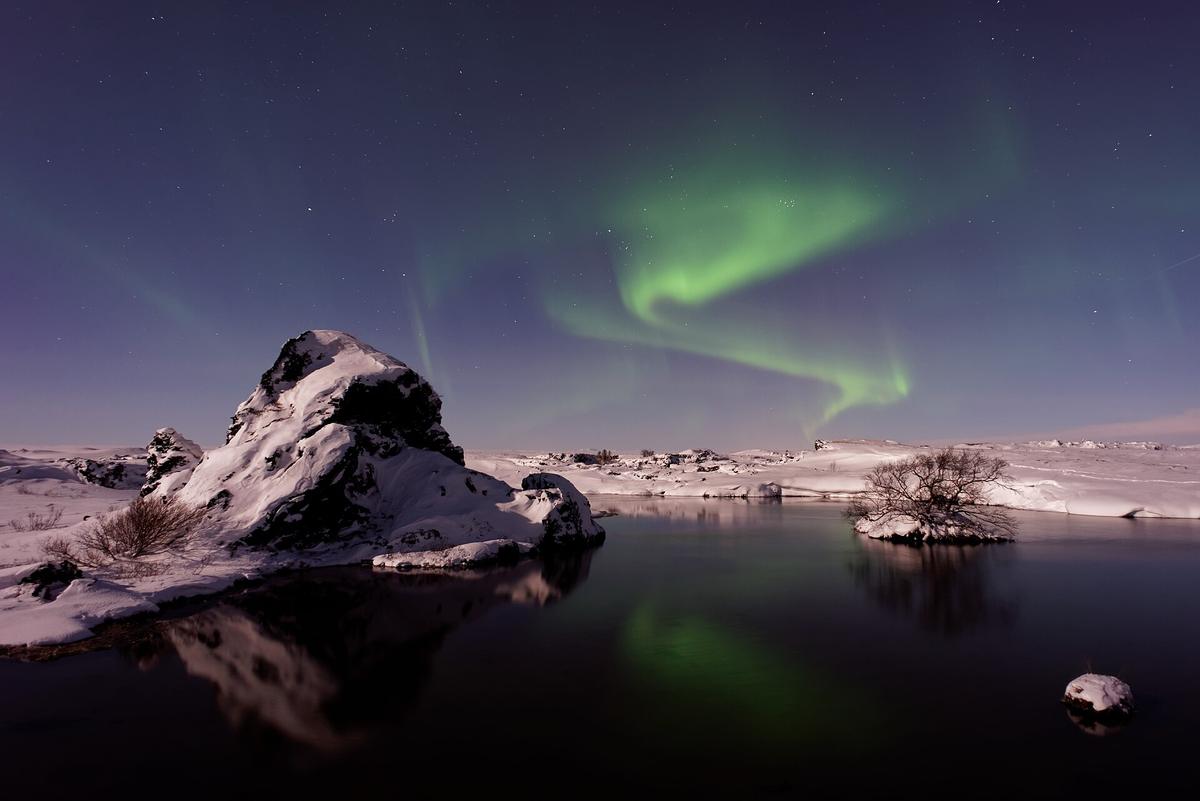
If you only want to see the city, eat lamb soup, and soak in geothermal pools, this window works. If you plan to drive the Ring Road, do not go. The northern lights are visible from September 1 to April 15, but the short window of astronomical darkness combined with cloud cover means you might see them for a few hours total across a week long trip. The failure case: you rent a 2WD car, a storm closes the Ring Road near Vik, and you spend the night in a cramped guesthouse with no vacancy signs in every window. Skip these months unless you are a photographer who specifically wants winter storm light and accepts the risk.
.jpg)
February Through April: Shoulder Season with Unreliable Roads
Rapidly Expanding Light
February daylight climbs from 7 hours 46 minutes on the 1st to 10 hours 10 minutes on the 28th. March breaks the 12 hour mark by the equinox. April hits 14 hours by the 15th.
Wildlife Windows
Orca watching peaks around Snæfellsnes in February and March when herring overwinter in the fjords. Puffins return to nesting cliffs in mid April.
The Road Trade Off
F roads remain closed until at least mid June. The highlands are inaccessible by ordinary vehicle. You can reach Landmannalaugar only by super jeep tours. Accommodation prices run 20 to 40 percent below summer peak. Crowds are thin. The failure case: you book a 4x4 expecting to drive F roads, but the snowmelt has not happened, and you spend three days on the Ring Road instead. Book a standard car and stick to the lowlands.
| Month | Daylight Range (Reykjavík) | F Roads Open | Crowd Level | Key Risk |
|---|---|---|---|---|
| January | 4h 07m – 7h 08m | No | Very Low | Storms, 3–4h safe driving window |
| February | 7h 46m – 10h 10m | No | Low | Closed highlands, winter storms |
| March | 10h 35m – 13h 15m | No | Low–Moderate | Icy roads, equinox wind |
| April | 13h 32m – 16h 00m | No (mid month) | Moderate | Mud, slush, unpredictable snow |
| May | 16h 19m – 19h 46m | No (most) | Moderate | F roads still closed, mid night sun starts May 20 |
| June | 20h 40m – 21h 09m (peak Jun 21) | Mid–late June | High | Peak pricing, book everything ahead |
| July | 21h 00m – 18h 22m | Yes | Very High | Driest but not dry, first week chaos |
| August | 17h 50m – 14h 24m | Yes (early month) | Very High (first week) | Verslunarmannahelgi, nationwide sellout |
| September | 14h 00m – 11h 25m | Begin closing | Moderate | Northern lights return, F roads close |
| October | 11h 12m – 8h 15m | No | Low | Rural closures, wet weather |
| November | 8h 00m – 5h 05m | No | Very Low | Dark, wet, many sites closed |
| December | 4h 24m – 4h 07m (solstice 21st) | No | Very Low | 4 hours light, extreme storm risk |

Read next
-
 Iceland Accommodation Types from Farm Stays to Hostels
A hotel in rural Iceland rarely means what it means elsewhere. The real differences between guesthouses, farm stays, hostels and campsites before you book.
Iceland Accommodation Types from Farm Stays to Hostels
A hotel in rural Iceland rarely means what it means elsewhere. The real differences between guesthouses, farm stays, hostels and campsites before you book.
-
 Where to Stay in Iceland for a Ring Road Road Trip
On an Iceland lap, the road decides where you sleep. Which bases break the Ring Road into sensible chunks, and where inventory runs dangerously low in July.
Where to Stay in Iceland for a Ring Road Road Trip
On an Iceland lap, the road decides where you sleep. Which bases break the Ring Road into sensible chunks, and where inventory runs dangerously low in July.
-
 Keflavik Airport Flights Transfers and Iceland Domestic Routes
Keflavík to Reykjavík has no train. Flybus, taxi costs, rental car pickup, and when a domestic flight from Reykjavík City Airport saves a day of driving.
Keflavik Airport Flights Transfers and Iceland Domestic Routes
Keflavík to Reykjavík has no train. Flybus, taxi costs, rental car pickup, and when a domestic flight from Reykjavík City Airport saves a day of driving.
-
 Iceland Experiences Worth Booking and Those That Depend on Weather
Some Iceland experiences vanish if you don't book weeks ahead. Silfra, ice caves, and Landmannalaugar huts sell out. Waterfalls and beaches just need you to show up.
Iceland Experiences Worth Booking and Those That Depend on Weather
Some Iceland experiences vanish if you don't book weeks ahead. Silfra, ice caves, and Landmannalaugar huts sell out. Waterfalls and beaches just need you to show up.
-
 Getting Around Iceland by Car F-Roads Wind and Road.is
Driving Iceland means understanding F-road legality, reading road.is, and respecting wind that can rip a door off its hinges. This guide covers what rental agencies won't tell you.
Getting Around Iceland by Car F-Roads Wind and Road.is
Driving Iceland means understanding F-road legality, reading road.is, and respecting wind that can rip a door off its hinges. This guide covers what rental agencies won't tell you.
-
 Iceland Schengen Visa Rules and the Upcoming ETIAS Requirement
Iceland is in the Schengen Area but not the EU customs union. Here is exactly what you need at Keflavík passport control, including the new ETIAS pre-authorisation.
Iceland Schengen Visa Rules and the Upcoming ETIAS Requirement
Iceland is in the Schengen Area but not the EU customs union. Here is exactly what you need at Keflavík passport control, including the new ETIAS pre-authorisation.
-
 South Iceland
How to drive Iceland's South Coast from Seljalandsfoss to Skaftafell, with honest timings, parking logistics, and the stops worth pulling over for.
South Iceland
How to drive Iceland's South Coast from Seljalandsfoss to Skaftafell, with honest timings, parking logistics, and the stops worth pulling over for.
-
 Capital Region
How to spend your arrival and departure days in Reykjavík, from the Miðborg walking loop to Vesturbær's local pools and the domestic airport at RKV.
Capital Region
How to spend your arrival and departure days in Reykjavík, from the Miðborg walking loop to Vesturbær's local pools and the domestic airport at RKV.
-
 East Iceland
How to drive Iceland's Eastfjords from Höfn to Egilsstaðir, with stops at Vestrahorn, Stuðlagil Canyon, and the puffin colony at Borgarfjörður Eystri.
East Iceland
How to drive Iceland's Eastfjords from Höfn to Egilsstaðir, with stops at Vestrahorn, Stuðlagil Canyon, and the puffin colony at Borgarfjörður Eystri.