Guesthouse, Farm Stay, Hotel, Hostel or Campsite in Iceland
A hotel in rural Iceland rarely means what it means elsewhere. The real differences between guesthouses, farm stays, hostels and campsites before you book.
Guesthouse, Farm Stay, Hotel, Hostel or Campsite in Iceland
You pull up to a house in rural Iceland that looks exactly like a residential home. No sign. No reception desk. A handwritten note taped to the door says your room is upstairs, second door on the left. That is a guesthouse. You booked it thinking it would operate like a hotel. It does not.
The mismatch between what visitors expect and what is actually on the ground is the single biggest point of friction in booking accommodation on this island. Most travellers arrive with a mental model of what a hotel or guesthouse means from North America or Western Europe. That model will fail you here. The Icelandic version of each category is a distinct beast shaped by a raw, lunar landscape, volatile weather, and a culture that treats hospitality as a practical transaction rather than a performance.
Every accommodation type in Iceland is defined by what it physically is, who it works for, and who should skip it. No fluff. Just the square metres, the bathroom situation, the breakfast norms, and the social contract you are signing when you hand over your card.

Guesthouse: the Converted Family Home
What You Actually Get
A guesthouse in Iceland is most often a private residence where the owners live on site and rent out three to eight bedrooms. Outside Reykjavik, the majority of guesthouses do not have en-suite bathrooms. You share a shower and toilet with other guests, usually on the same floor. The price you pay reflects this: expect to spend less than a hotel but more than a hostel. A double room in a guesthouse sits in the 15,000 to 25,000 ISK range per night in peak season. Breakfast is rarely included. If offered, it costs 2,000 to 3,500 ISK per person. Skip that. Buy bread, skyr, coffee, and fruit from a supermarket for 500 to 1,000 ISK per person and eat in the shared kitchen.
Who It Suits
The upside of a guesthouse is the access. Owners are local. They know the road conditions, the hidden waterfall, the short cut that avoids the tour bus convoy. The downside is privacy. You will hear other guests through thin walls. The hot water ratio can get tight in the morning. If you want silent seclusion, a guesthouse is not that. If you want a local briefing over coffee and a chance to swap driving notes with other travellers, a guesthouse is exactly that.
Who should book this: solo road trippers, landscape photographers, couples comfortable with shared facilities. Who should not: anyone who needs guaranteed en-suite bathrooms, light sleepers who cannot handle creaky floors, and travellers who arrive after 21:00 and expect a 24-hour reception desk.
Farm Stay: Working Farms with Rooms and Smells
The Reality of Staying on a Working Farm
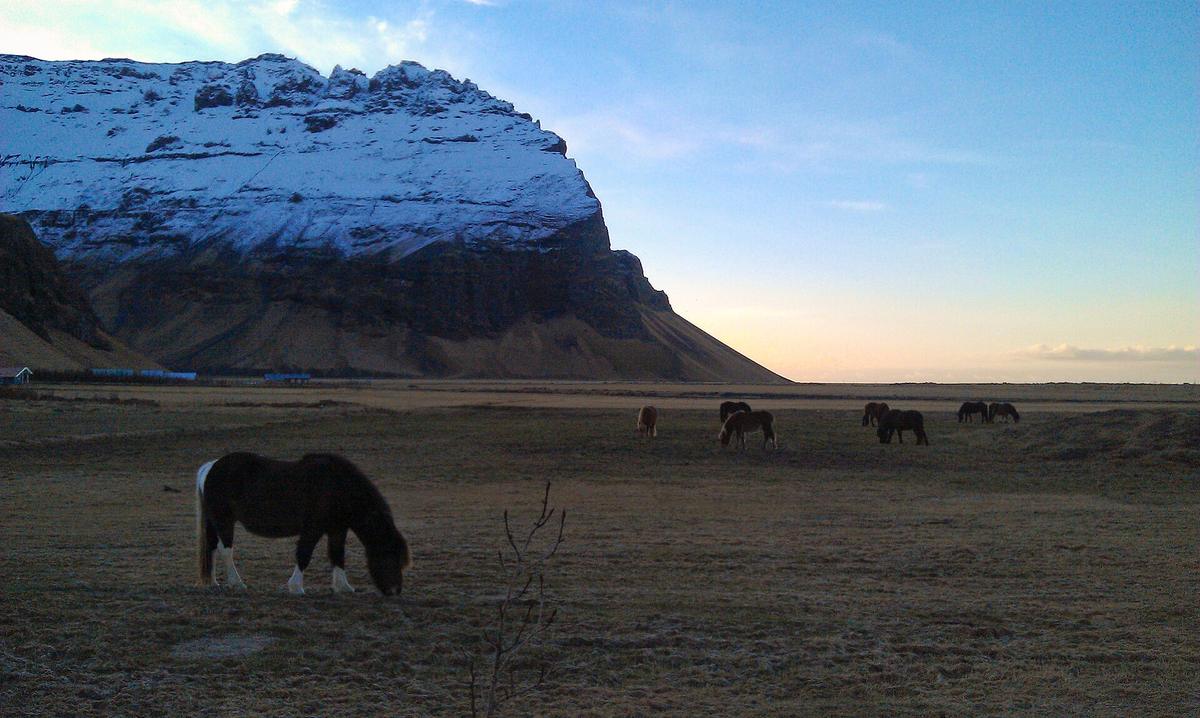
A farm stay is a working farm that rents out rooms or cottages to guests. Sheep, horses, or dairy cows are active on the property. You will smell them. That is not a flaw. It is the point. Most farm stays include a shared kitchen and a shared bathroom. Breakfast often happens in the family kitchen, not a dining room. You sit with the family or with other guests. The food comes from the farm: eggs, rye bread, skyr, possibly rúgbrauð baked in geothermal heat.
The physical space varies wildly. Some farm stays are modern cottages with full kitchens and private entrances. Others are a partitioned-off section of the main house with a door that locks but walls that do not. Before booking, check the exact description. If the listing says "sleeping bag accommodation", that means you bring your own sleeping bag. No pillows or duvets supplied. That option runs 3,000 to 7,000 ISK per person per night. It is the cheapest way to sleep indoors in Iceland, but it is not comfortable for everyone.
Who Should Book, Who Should Skip
Farm stays suit travellers who want a direct connection to Icelandic rural life. They do not suit anyone with animal allergies, anyone who expects a soundproof room, or anyone who finds the idea of breakfast conversation with strangers unappealing. The price for a double room on a farm stay usually lands between 12,000 and 22,000 ISK per night, cheaper than a hotel but more variable in quality.
Hotel: a Room Above a Restaurant, Often
A hotel in rural Iceland is rarely a multi story building with a lobby, a gym, and room service. More often it is a dozen rooms above a restaurant or a row of standalone cabins behind a petrol station. The price step up is significant: 25,000 to 60,000 ISK per night for a double room. Breakfast is included at roughly 60% of hotels outside Reykjavik. At the other 40%, you pay the same 2,000 to 3,500 ISK per person as at a guesthouse.
What you get for that higher price is privacy. A private bathroom. A door that locks securely. A restaurant downstairs so you do not have to drive in the dark for dinner. The reliability is better than a guesthouse. The tradeoff is character. Most rural hotels serve the same menu, sell the same souvenirs at reception, and look identical to the next one 50 kilometres down the road. They are functional. They are not memorable.
Book a hotel when you need a guaranteed en-suite bathroom, when you are arriving late and leaving early, or when weather conditions make driving to a separate restaurant dangerous. Skip the hotel when you want local flavour or when your budget cannot stretch past 25,000 ISK per night. The hotel is the safe choice, not the interesting one.
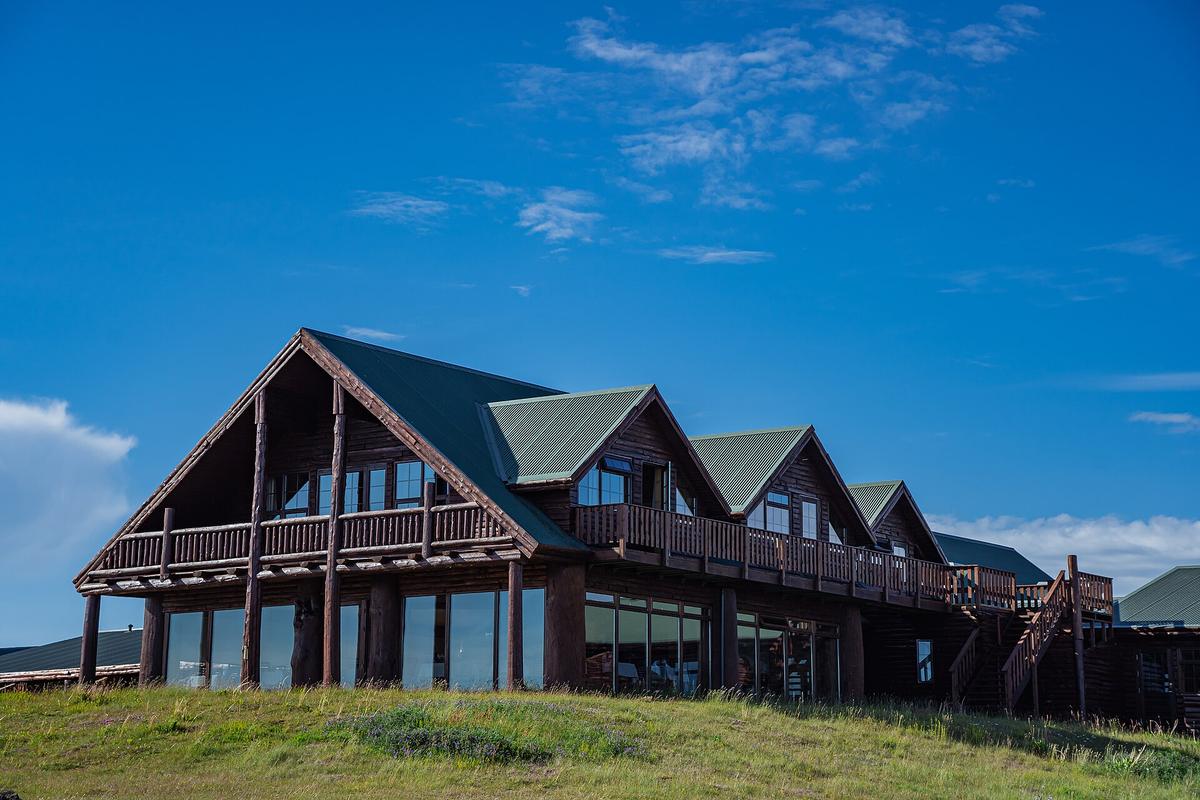
Hotel Glymur in Hvalfjörður is the type specimen of the other kind of Icelandic hotel: the country property that is a destination rather than a bed on a route. Twenty-two rooms, no televisions in them, one restaurant, two outdoor hot tubs and nothing else within half an hour. Bought on purpose it is the best night of a trip; booked by accident because it looked close to Reykjavík on a map, it is an evening with no dinner options and a 50 km drive back to anywhere.

| Type | Bathroom | Kitchen Access | Breakfast | Price Range Per Night (Double) |
|---|---|---|---|---|
| Hotel | Private en-suite | Rarely | Included ~60% | 25,000 - 60,000 ISK |
| Guesthouse | Usually shared | Often shared | Extra 2,000 - 3,500 ISK | 15,000 - 25,000 ISK |
| Farm Stay | Usually shared | Often shared | Sometimes included; varies | 12,000 - 22,000 ISK |
| Hostel | Shared dorm or private | Yes, full | Extra or self-catered | 5,000 - 12,000 ISK dorm; 14,000 - 22,000 ISK private |
| Campsite | Public shared | Cookhouse or own stove | Self-catered only | 1,500 - 3,000 ISK per person |
Hostel: Dormitory Beds and Private Rooms with a Social Edge
Icelandic hostels are the most consistent accommodation type on the island. They offer dormitory beds, private rooms with shared bathrooms, and full kitchens. Nearly every hostel outside Reykjavik follows the same model: clean, efficient, and staffed by travellers or locals who know the area well. Dorm beds run from 5,000 to 8,000 ISK per night in peak season. Private rooms in a hostel cost 14,000 to 22,000 ISK, which overlaps with guesthouse territory. The advantage is kitchen access. You can cook your own meals, which matters when a restaurant dinner for one runs 4,000 to 7,000 ISK.
If you have a Hostelling International membership, you get 10 to 15% off the standard rate. Ask at check in. Most hostels do not apply the discount automatically.
Hostels are not for everyone. If you need silence to sleep, a dormitory with eight strangers is a gamble. If you travel heavy, hostel lockers are small. The social pressure to talk can feel like a burden after a full day of driving. But for solo travellers, motorcyclists, and anyone on a tight budget, hostels are the best value on the island. They also serve as informal information exchanges: the notice board in the kitchen will tell you which F roads are passable, which campsite was full last night, and which waterfall has car break ins.
Common Questions
What is sleeping bag accommodation?
It is a budget room where you must bring your own sleeping bag. No pillows or duvets are supplied. You sleep on a bare mattress in a shared or private room. It costs 3,000 to 7,000 ISK per person per night. It is the cheapest indoor option but not comfortable for cold sleepers.
Do most guesthouses have private bathrooms?
No. Outside Reykjavik, the majority of guesthouses have shared bathrooms, not en suite. Always check the listing. If the bathroom is not mentioned, assume it is shared.
Is breakfast included in the room price?
At hotels outside Reykjavik, breakfast is included roughly 60% of the time. At guesthouses, it is almost always an extra cost of 2,000 to 3,500 ISK per person. A supermarket breakfast costs 500 to 1,000 ISK per person and requires a kitchen.
Can I camp year round in Iceland?
Fewer than 10 campsites stay open outside summer months. Most operate from mid May to mid September. Camping in winter means booking the handful of year round sites or wild camping, which has its own rules.
What is the Camping Card and is it worth it?
The Camping Card costs 17,900 ISK for two adults and up to four children and covers 41 campsites for the 2024 season. It is valid from mid May to mid September. You break even after about 6 nights. If you plan 7 or more camping nights, buy it.
How many campsites are in Iceland?
Approximately 170 registered campsites exist nationwide. The Camping Card covers 41 of them. The rest charge per person per night, usually 1,500 to 3,000 ISK.
Can I rely on hostels having a Hostelling International discount?
If you have a valid HI membership, you can request a 10 to 15% discount. Not all staff apply it automatically. Ask at check in. The discount applies only to standard rates, not promotions.
Read next
-
 Where to Stay in Iceland for a Ring Road Road Trip
On an Iceland lap, the road decides where you sleep. Which bases break the Ring Road into sensible chunks, and where inventory runs dangerously low in July.
Where to Stay in Iceland for a Ring Road Road Trip
On an Iceland lap, the road decides where you sleep. Which bases break the Ring Road into sensible chunks, and where inventory runs dangerously low in July.
-
 Keflavik Airport Flights Transfers and Iceland Domestic Routes
Keflavík to Reykjavík has no train. Flybus, taxi costs, rental car pickup, and when a domestic flight from Reykjavík City Airport saves a day of driving.
Keflavik Airport Flights Transfers and Iceland Domestic Routes
Keflavík to Reykjavík has no train. Flybus, taxi costs, rental car pickup, and when a domestic flight from Reykjavík City Airport saves a day of driving.
-
 Iceland Experiences Worth Booking and Those That Depend on Weather
Some Iceland experiences vanish if you don't book weeks ahead. Silfra, ice caves, and Landmannalaugar huts sell out. Waterfalls and beaches just need you to show up.
Iceland Experiences Worth Booking and Those That Depend on Weather
Some Iceland experiences vanish if you don't book weeks ahead. Silfra, ice caves, and Landmannalaugar huts sell out. Waterfalls and beaches just need you to show up.
-
 Best Time to Visit Iceland Month by Month With Daylight Hours
Iceland changes radically by month. This calendar covers daylight hours, road openings, puffin season, northern lights windows, and the two summer weekends that book out nationwide.
Best Time to Visit Iceland Month by Month With Daylight Hours
Iceland changes radically by month. This calendar covers daylight hours, road openings, puffin season, northern lights windows, and the two summer weekends that book out nationwide.
-
 Getting Around Iceland by Car F-Roads Wind and Road.is
Driving Iceland means understanding F-road legality, reading road.is, and respecting wind that can rip a door off its hinges. This guide covers what rental agencies won't tell you.
Getting Around Iceland by Car F-Roads Wind and Road.is
Driving Iceland means understanding F-road legality, reading road.is, and respecting wind that can rip a door off its hinges. This guide covers what rental agencies won't tell you.
-
 Iceland Schengen Visa Rules and the Upcoming ETIAS Requirement
Iceland is in the Schengen Area but not the EU customs union. Here is exactly what you need at Keflavík passport control, including the new ETIAS pre-authorisation.
Iceland Schengen Visa Rules and the Upcoming ETIAS Requirement
Iceland is in the Schengen Area but not the EU customs union. Here is exactly what you need at Keflavík passport control, including the new ETIAS pre-authorisation.
-
 South Iceland
How to drive Iceland's South Coast from Seljalandsfoss to Skaftafell, with honest timings, parking logistics, and the stops worth pulling over for.
South Iceland
How to drive Iceland's South Coast from Seljalandsfoss to Skaftafell, with honest timings, parking logistics, and the stops worth pulling over for.
-
 Capital Region
How to spend your arrival and departure days in Reykjavík, from the Miðborg walking loop to Vesturbær's local pools and the domestic airport at RKV.
Capital Region
How to spend your arrival and departure days in Reykjavík, from the Miðborg walking loop to Vesturbær's local pools and the domestic airport at RKV.
-
 East Iceland
How to drive Iceland's Eastfjords from Höfn to Egilsstaðir, with stops at Vestrahorn, Stuðlagil Canyon, and the puffin colony at Borgarfjörður Eystri.
East Iceland
How to drive Iceland's Eastfjords from Höfn to Egilsstaðir, with stops at Vestrahorn, Stuðlagil Canyon, and the puffin colony at Borgarfjörður Eystri.