Walking Onto Sólheimajökull, Iceland's Beginner Glacier Hike
Sólheimajökull is Iceland's most popular beginner glacier hike. Learn what crampon-fitting feels like, how tough the walk is, and why unguided access is fatal.

Walking Onto Sólheimajökull, Iceland’s Beginner Glacier Hike
The parking lot is a timeline. To your left, signposts mark where the ice edge sat in 2010, 2015, and 2020. Ahead, a grey tongue of ancient ice slumps into a milky lagoon that did not exist fifteen years ago. You came to walk on that ice. Can you do it safely without a guide? No.
- Location: South Iceland, between Skógafoss and Vík, off Route 1
- Access Road: Road 221, 4.5 km gravel track from the Ring Road
- Walk from Car Park to Ice: 800 m to 1.2 km, 15 to 25 minutes, loose gravel path
- Guided Hike Duration: 2.5 to 5 hours
- Guided Hike Price Range (2024): ISK 9,000 to 16,900 per person
- Minimum Age: 8 to 10 years, varies by operator
- Equipment Provided: Crampons, ice axe, helmet, harness
- Equipment You Must Bring: Stiff, ankle-high hiking boots; waterproof jacket and trousers; gloves; hat
The 25-Minute Walk That Reminds You Where You Are
Getting to the ice is half the experience. Leave your rental car in the gravel lot at the end of Road 221, a 4.5 km spur off the Ring Road. The walk to the glacier edge runs 800 metres to 1.2 kilometres, depending on where the terminus sits that month. Allow 15 to 25 minutes on loose gravel with a slight incline. There is no fixed path, no handrail, no shelter. The moraine on either side is bare rock and dust. This walk filters out people who packed trainers instead of boots.
What a Sólheimajökull Glacier Hike Actually Demands
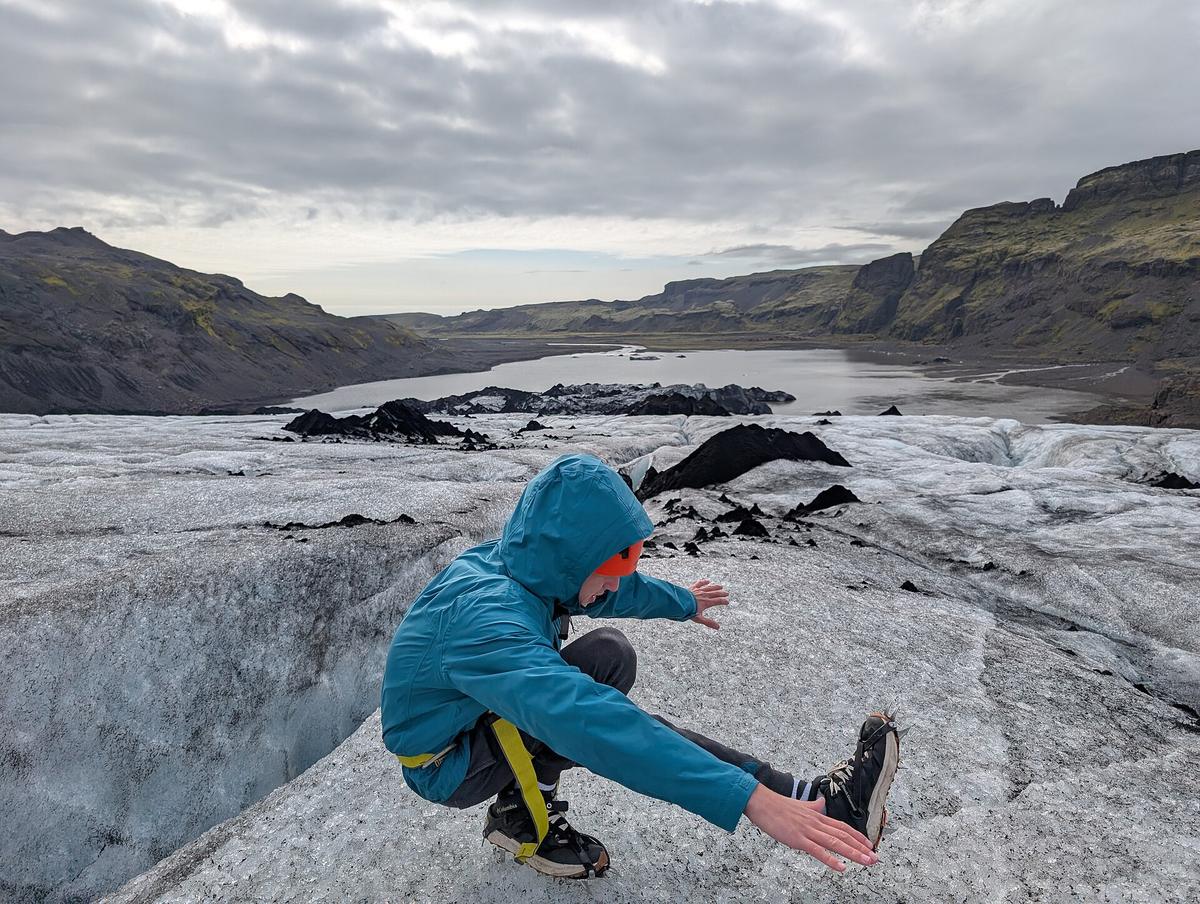
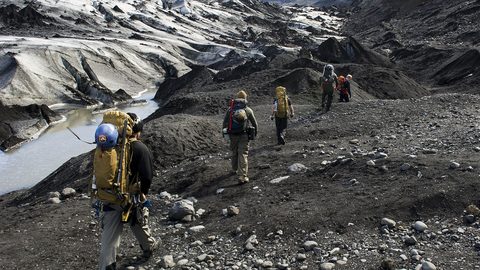
A Sólheimajökull glacier hike tour requires moderate fitness, not mountaineering experience. You will walk 3 to 5 km on ice that slopes, cracks, and shifts underfoot. The operator provides strap-on crampons, an ice axe, a helmet, and a harness. Your own stiff, ankle-high hiking boots are non-negotiable. Soft shoes or trail runners will not hold the crampon straps, and your ankles will roll on the first uneven step.
The Crampon Fitting
Your guide checks the fit before anyone sets foot on the ice. Strap-on crampons attach over your boots. Your guide tightens each strap and makes you walk a few metres on gravel to test the bite. If the crampon shifts, you do not proceed. This takes five minutes per person. Do not rush it.
The Ice Terrain
Expect a surface that changes under your feet. One step lands on hard blue ice, the next on granular snow. Crampons grip both, but the sensation is unfamiliar. Your stride shortens automatically. Your guide leads one line, and you step exactly where they step. No detours, no exploring. The ice holds crevasses hidden under thin snow bridges, ice collapse at the terminus, and falling seracs. These are not theoretical risks. They are why the unguided death toll exists.
The Tour Duration Options
Operators offer 2.5-hour, 3-hour, and 5-hour tours. The 2.5-hour option reaches the first ice formations and turns back. It satisfies photo goals and the desire to say you did it. The 5-hour tour goes deeper onto the glacier, past the visible fractures, to where the ice compresses into pressure ridges and deep blue meltwater channels. Book the longer tour only if your fitness level allows an extra hour on uneven terrain in cold wind. The shorter tour suits anyone who doubts their stamina. For a completely different Icelandic experience, consider the coastal town of Hofn, where the focus shifts from ice underfoot to langoustine on your plate.
Why Unguided Access is Lethal Here
Four specific dangers kill or injure people on Sólheimajökull every year. Hidden crevasses under thin snow bridges drop into voids up to 150 metres deep. The terminus collapses without warning. Sudden glacial floods called jökulhlaups, triggered by geothermal activity under the Mýrdalsjökull ice cap, surge through the lagoon and across the moraine. Falling ice from seracs breaks off the front wall. No crampon rental on site, no app, and no guidebook replaces a trained guide reading the ice in real time. Do not attempt this alone.
Who Should Skip This Tour Entirely
If your travel partner or child is under eight, choose something else. If you cannot walk 3 km on uneven ground in boots, skip the hike. If your idea of a great Iceland day involves dry shelter and a hot lunch, book the November-to-March ice cave tour instead. It lasts 3 to 4 hours, costs ISK 15,000 to 22,000 per person, and requires less balance. Both tours use the same parking lot. You decide at the car.
.jpg)
The Glacier You See Now Will Not Be Here Forever
Sólheimajökull is an outlet glacier of the Mýrdalsjökull ice cap. Since 1930, it has retreated roughly 1.5 kilometres. Since 2000, the retreat measures 300 to 400 metres. The glacier area lost about 2 square kilometres between 2000 and 2020. The walk to the ice edge gets longer every year. The proglacial lake forming at the terminus first appeared around 2010 and expands with each melt season. The signposts on the path mark where the ice edge stood in recent years. They are not decoration. They are a countdown.
Book the Tour Before You Arrive
Four main operators run guided hikes: Arctic Adventures, Icelandic Mountain Guides, Troll Expeditions, and Glacier Guides. Group sizes cap at 12 to 15 persons per guide. In peak season, June through August, afternoon tours book out days in advance. Reserve your slot online before you drive south from Reykjavík. The price range for 2024 sits at ISK 9,000 to 16,900 per person. The cheaper tours are the 2.5-hour versions. The 5-hour versions hit the upper end. Pay the extra if your body can handle it.
Common Questions
Do I need prior glacier hiking experience?
No. The guided Sólheimajökull glacier hike is designed for beginners with no crampon experience. You must have moderate fitness and stiff hiking boots. Your guide teaches every step.
What happens if I show up without hiking boots?
Most operators will refuse to take you. Strap-on crampons require stiff ankle-high boots to stay secure. Sneakers and soft shoes do not work. Rent boots in Reykjavík before you drive south.
Is the ice cave tour easier or harder than the hike?
Easier. Ice cave tours require less walking and no crampon technique. They run November through March only and cost more, ISK 15,000 to 22,000. Book a cave tour if balance or stamina is a concern.
Can I see the glacier without paying for a tour?
Yes. You can walk the moraine path to the lagoon and view the terminus from a safe distance. You cannot step on the ice. Unguided walking on the glacier itself is lethal due to crevasses and collapse.
Read next
-
 Jokulsarlon Glacier Lagoon
Why Jökulsárlón glacier lagoon demands an overnight stay, not a Reykjavík day trip, plus zodiac boat booking and Diamond Beach photography timing.
Jokulsarlon Glacier Lagoon
Why Jökulsárlón glacier lagoon demands an overnight stay, not a Reykjavík day trip, plus zodiac boat booking and Diamond Beach photography timing.
-
 Reynisfjara Black Sand Beach
Reynisfjara is Iceland's most dangerous beach. Learn the sneaker wave warning system, where the death zone lies, and how to visit the basalt columns safely.
Reynisfjara Black Sand Beach
Reynisfjara is Iceland's most dangerous beach. Learn the sneaker wave warning system, where the death zone lies, and how to visit the basalt columns safely.
-
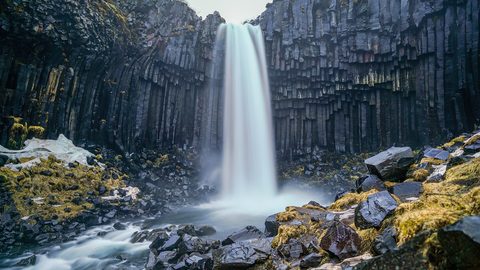 Skaftafell
 is the hiking gateway to Vatnajökull National Park. Compare trail lengths, the Svartifoss basalt column route, and glacier viewpoints before you arrive.
Skaftafell
Skaftafell is the hiking gateway to Vatnajökull National Park. Compare trail lengths, the Svartifoss basalt column route, and glacier viewpoints before you arrive.
-
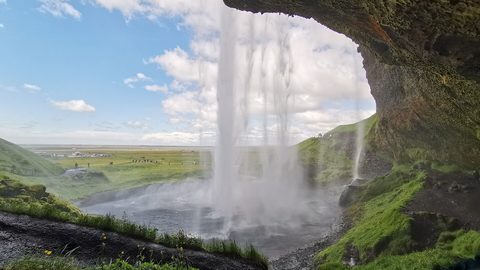 Seljalandsfoss
 lets you walk behind the cascade, but the real reward is Gljúfrabúi hidden in a canyon cleft next door. Learn the wading route and parking system.
Seljalandsfoss
Seljalandsfoss lets you walk behind the cascade, but the real reward is Gljúfrabúi hidden in a canyon cleft next door. Learn the wading route and parking system.
-
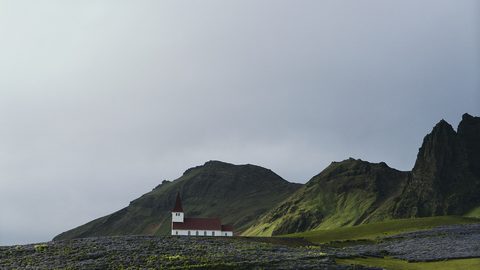 Vik
Understand the dangers of Reynisfjara’s sneaker waves and plan a safe, rewarding stop in Vík on Iceland’s south coast.
Vik
Understand the dangers of Reynisfjara’s sneaker waves and plan a safe, rewarding stop in Vík on Iceland’s south coast.
-
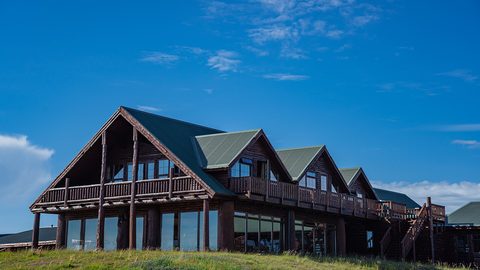 Iceland Accommodation Types from Farm Stays to Hostels
A hotel in rural Iceland rarely means what it means elsewhere. The real differences between guesthouses, farm stays, hostels and campsites before you book.
Iceland Accommodation Types from Farm Stays to Hostels
A hotel in rural Iceland rarely means what it means elsewhere. The real differences between guesthouses, farm stays, hostels and campsites before you book.
-
 Where to Stay in Iceland for a Ring Road Road Trip
On an Iceland lap, the road decides where you sleep. Which bases break the Ring Road into sensible chunks, and where inventory runs dangerously low in July.
Where to Stay in Iceland for a Ring Road Road Trip
On an Iceland lap, the road decides where you sleep. Which bases break the Ring Road into sensible chunks, and where inventory runs dangerously low in July.
-
 Keflavik Airport Flights Transfers and Iceland Domestic Routes
Keflavík to Reykjavík has no train. Flybus, taxi costs, rental car pickup, and when a domestic flight from Reykjavík City Airport saves a day of driving.
Keflavik Airport Flights Transfers and Iceland Domestic Routes
Keflavík to Reykjavík has no train. Flybus, taxi costs, rental car pickup, and when a domestic flight from Reykjavík City Airport saves a day of driving.
-
 Iceland Experiences Worth Booking and Those That Depend on Weather
Some Iceland experiences vanish if you don't book weeks ahead. Silfra, ice caves, and Landmannalaugar huts sell out. Waterfalls and beaches just need you to show up.
Iceland Experiences Worth Booking and Those That Depend on Weather
Some Iceland experiences vanish if you don't book weeks ahead. Silfra, ice caves, and Landmannalaugar huts sell out. Waterfalls and beaches just need you to show up.