Bringing Your Own Car to Iceland on the Norröna Ferry What It Saves and Costs
A practical guide to Bringing Your Own Car to Iceland on the Norröna Ferry What It Saves and Costs.

What the ferry really replaces
Bringing your own car to Iceland on the Norröna ferry is not a shortcut. It is a trade. You swap a three-hour flight and a rental counter queue for a multi-night North Atlantic crossing and a customs form. The decision turns on two numbers: what you pay to transport your vehicle and yourself by sea, and what you would pay to fly and rent a comparable car for the same itinerary.
The Norröna sails between Hirtshals in northern Denmark and Seyðisfjörður on Iceland's east coast, with a stop in Tórshavn on the Faroe Islands. The Iceland season runs from roughly mid-March to late November. In January, February and December there are no Iceland sailings at all. Summer crossings take two nights aboard. Spring and autumn crossings stretch to three nights. Either way, you arrive on the opposite side of the country from Keflavík International Airport, which sits near Reykjavík in the southwest. That geography matters for your first and last day of driving.
Ferry costs are built from three parts
Smyril Line does not publish a fixed fare list. The total price is assembled from three components: the crossing per person, a mandatory berth ranging from a couchette to a suite, and a vehicle fee based on length and height. A standard vehicle is defined as no taller than 1.90 metres and no longer than 5 metres. Anything above those dimensions moves into a higher pricing tier, with the tallest bracket starting at 2.50 metres in height. If you drive a large SUV, a campervan or a vehicle with a roof box, expect to pay more than the baseline car rate.
As a reference point, Smyril Line has offered promotional return fares for a standard car and an inside cabin from around €499 per person when two people travel together, covering selected low-fare dates in late spring and early summer. That works out to roughly €1,000 total for two people with one vehicle. This is not a guaranteed price. Fares are dynamic, summer vehicle spaces can sell out months ahead, and the number you see for your dates may be substantially higher. The booking requires a 25% deposit at the time of reservation, with a minimum deposit of €810, and the balance is due 30 days before departure. If you cancel more than 30 days out, you forfeit 10% of the journey price.

What flying and renting costs for two weeks
To compare fairly, you need to price the alternative. Return flights from mainland Europe to Reykjavík have been available from around €137 per person on one-stop routings and from roughly €270 to €315 per person for direct flights. Two people flying direct might therefore spend somewhere in the region of €540 to €630 on airfare, though this varies sharply by departure city, season and how early you book.
On the ground, a 14-day car rental in summer gives you a baseline. An economy car such as a Hyundai i10 has rented for approximately $1,492 USD for two weeks in August. A mid-size SUV more suited to gravel roads and highland approaches, such as a Dacia Duster, has cost around $1,949 USD for the same period. Convert these figures to euros at the prevailing rate and add them to your flight cost, and you have a rough total for the fly-and-rent approach. The ferry-plus-own-car total must then be weighed against that number, but the comparison is not complete until you account for what happens after you arrive.
Arrival costs that only apply to your own vehicle
Bringing a foreign-registered vehicle into Iceland triggers costs that a rental car does not carry. Since the start of 2026, all temporarily imported vehicles must pay a kilometre-based road-use fee. For stays of 30 days or fewer, the fee is a fixed amount based on the length of your visit. A trip of up to 10 days incurs a charge of 13,900 ISK. For 11 to 20 days the fee rises to 20,850 ISK, and for 21 to 30 days it reaches 24,325 ISK. These figures apply to vehicles up to 3.5 tonnes. A two-week trip therefore adds 20,850 ISK to your total, payable regardless of how far you actually drive.
You must also complete customs form E-9 for the temporary import of a vehicle with foreign registration plates before you arrive. A copy of the form must stay in the vehicle at all times. The vehicle may remain in Iceland for a maximum of 12 months. This is a straightforward administrative step, but it is one that a rental customer never faces.
Fuel is another variable. Petrol prices in Iceland have recently hovered around 276 to 280 ISK per litre, while diesel has been higher at roughly 326 to 331 ISK per litre. A full Ring Road itinerary with detours to major sights typically covers between 1,800 and 2,500 kilometres. Whether you drive your own car or a rental, you will buy the same fuel, but the efficiency of your own vehicle versus a rental you have never driven before may differ, and that affects your pump spend.
The time and geography equation
A cost comparison that ignores time misses the point. The Norröna crossing consumes two or three nights each way. A summer sailing departs Hirtshals on Tuesday late morning and reaches Seyðisfjörður on Thursday morning. In spring and autumn, a Sunday afternoon departure arrives on Wednesday morning. You need to reach Hirtshals in northern Denmark before sailing, and once you disembark in Seyðisfjörður you are roughly 700 kilometres from Reykjavík on the Ring Road. That east-coast arrival means your first day of driving in Iceland will be spent crossing the country, not starting a loop from the capital region.
By contrast, a flight from mainland Europe lands at Keflavík in three to four hours. You can be on the road within an hour of touchdown if you have pre-booked a rental. For a two-week trip, the ferry consumes between four and six nights of your holiday just in transit. If your available leave is fixed, those are nights you are not spending in Iceland's interior or on a multi-day hike. If your schedule is flexible, the crossing can be framed as part of the experience rather than a loss of touring time.
When bringing your own car makes sense
The arithmetic tilts toward the ferry under a few specific conditions. If you already own a vehicle suited to Icelandic conditions, particularly a diesel 4x4 or a campervan that would be expensive to rent for two weeks, the vehicle fee on the Norröna may be substantially less than the rental cost of an equivalent vehicle. The promotional fare of roughly €1,000 for two people with a car, plus the road-use fee and fuel, can undercut the combined cost of flights and a mid-size SUV rental, especially if you would have rented that SUV anyway for highland roads.
The ferry also solves a luggage problem that airlines charge to handle. Camping gear, a full set of cooking equipment, winter clothing for multiple people, or specialised photography kit can all be packed into your own vehicle without weight limits or excess baggage fees. If your trip involves extended camping or self-supported travel in the highlands, the ability to bring your own organised vehicle has practical value beyond the line-item cost comparison.
There is also a case for travellers who plan to stay longer than a typical two-week holiday. The temporary import rules allow a vehicle to remain for up to 12 months. For a multi-month trip, the ferry cost is amortised over a far longer period, and the rental alternative becomes prohibitively expensive. The road-use fee for a 21-to-30-day stay is 24,325 ISK, and for longer stays the fee structure changes to a kilometre-based charge that you must verify with the authorities before travel.
How to run your own numbers
Every comparison in the guidance depends on prices that change with the season, the booking window and the market. To make a decision for your own trip, you need live figures for your specific dates and vehicle. Start by searching the Smyril Line booking engine for your intended sailing dates with your vehicle's exact length and height. Note the total fare including the mandatory cabin. Then search flight prices for the same travel window from your nearest airport to Keflavík. Finally, check rental car rates for a vehicle comparable to your own for a 14-day hire period. Add the road-use fee for your length of stay, which you can confirm on the official Ísland.is website. Fuel costs will be similar enough between the two options that you can treat them as roughly equal for a first-pass comparison, though you should check current pump prices before finalising your budget.
If the ferry total is within 10 to 15% of the fly-and-rent total, the decision probably comes down to how you value time, comfort and the flexibility of having your own vehicle. If the ferry is significantly more expensive, it only makes sense if the non-financial benefits, such as carrying extensive gear or avoiding the rental counter entirely, are worth the premium to you.
Sources and verification
- smyrilline.com — Research source checked for this guide
- smyrilline.com — Research source checked for this guide
- smyrilline.com — Research source checked for this guide
- smyrilline.com — Research source checked for this guide
- island.is — Research source checked for this guide
- skatturinn.is — Research source checked for this guide
Read next
-
 Iceland Accommodation Types from Farm Stays to Hostels
A hotel in rural Iceland rarely means what it means elsewhere. The real differences between guesthouses, farm stays, hostels and campsites before you book.
-
 Where to Stay in Iceland for a Ring Road Road Trip
On an Iceland lap, the road decides where you sleep. Which bases break the Ring Road into sensible chunks, and where inventory runs dangerously low in July.
-
 Keflavik Airport Flights Transfers and Iceland Domestic Routes
Keflavík to Reykjavík has no train. Flybus, taxi costs, rental car pickup, and when a domestic flight from Reykjavík City Airport saves a day of driving.
-
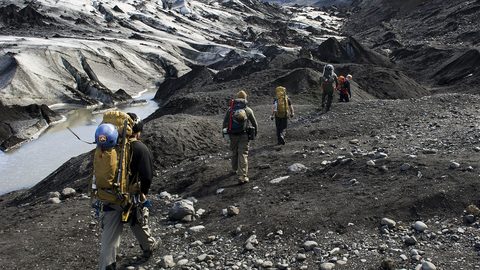 Iceland Experiences Worth Booking and Those That Depend on Weather
Some Iceland experiences vanish if you don't book weeks ahead. Silfra, ice caves, and Landmannalaugar huts sell out. Waterfalls and beaches just need you to show up.
-
 Best Time to Visit Iceland Month by Month With Daylight Hours
Iceland changes radically by month. This calendar covers daylight hours, road openings, puffin season, northern lights windows, and the two summer weekends that book out nationwide.
-
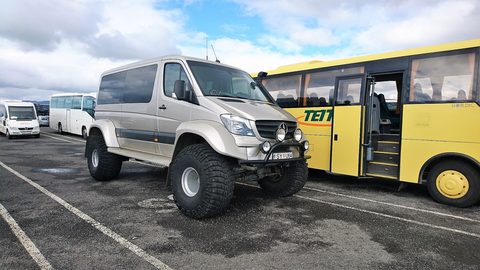 Getting Around Iceland by Car F-Roads Wind and Road.is
Driving Iceland means understanding F-road legality, reading road.is, and respecting wind that can rip a door off its hinges. This guide covers what rental agencies won't tell you.
-
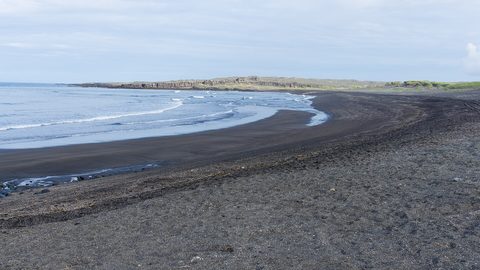 South Iceland
How to drive Iceland's South Coast from Seljalandsfoss to Skaftafell, with honest timings, parking logistics, and the stops worth pulling over for.
-
 Capital Region
How to spend your arrival and departure days in Reykjavík, from the Miðborg walking loop to Vesturbær's local pools and the domestic airport at RKV.
-
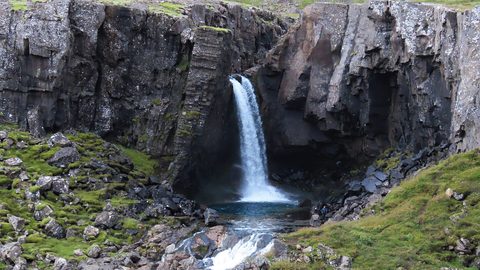 East Iceland
How to drive Iceland's Eastfjords from Höfn to Egilsstaðir, with stops at Vestrahorn, Stuðlagil Canyon, and the puffin colony at Borgarfjörður Eystri.