Eating in Iceland Without Blowing Your Budget
Iceland food prices shock the unprepared. The supermarket hierarchy, what to buy at Bónus, which petrol-station meals are worth it, and when a restaurant splurge makes sense.
Eating in Iceland Without Blowing Your Budget
Most visitors arrive expecting high restaurant prices and plan to eat every meal out. That is the fastest way to burn through your daily budget in two plates. Nearly every trip to Iceland involves some self-catering. Those who do it well eat better and spend half as much. The strategy is not to avoid restaurants entirely. Know which meals justify their cost and which ones you can replicate from a supermarket cooler for a fraction of the price.
The supermarket landscape has a clear hierarchy. Learn it before you land and you will never overpay for basics.
Bónus: Your First Stop
Bónus is the cheapest grocery chain in the country. Its yellow sign with a pink pig is the most welcome sight on a long drive. Prices run 30 to 50 percent lower than petrol station shops. Hours are 10:00 to 19:00, though rural locations close earlier and some shut on Sunday. Plan your route around Bónus stops. A loaf of bread, butter, skyr, cheese, crackers, apples, and a bag of carrots covers three breakfasts and two lunches.
Krónan: The Alternative
Krónan is slightly more expensive than Bónus but open longer, usually 09:00 to 20:00. It has better produce sections and more locations in the capital. If Bónus is closed, Krónan is your next move. The quality difference is negligible.
Nettó: The Late-Night Option
Nettó matches Krónan on price but beats both on hours. Some Reykjavík locations are open 24 hours. If you arrive on a late flight and need supplies before morning, Nettó is the only chain that saves you from a petrol station markup. Use it sparingly outside the capital. Rural Nettó stores follow shorter hours.
10-11: Emergency Only
10-11 is a convenience store with grocery prices that start 30 percent higher than Bónus and climb from there. Use it only when nothing else is open. A tub of skyr costs roughly double what you pay at Bónus. The same markup applies to everything on the shelf.
The Grocery Haul That Works
Here is a realistic one-person haul for three days of road-trip meals. At Bónus: two large tubs of skyr, one loaf of rye bread, a block of butter, six eggs, a bag of apples, a tube of cheese spread, a packet of harðfiskur dried fish jerky, and two packets of instant noodles. Compare that to three restaurant lunches and you have saved around 7,000 ISK in one haul.

Petrol Station Food: the Legitimate Mid-Tier
Petrol stations in Iceland do not sell sad sandwiches from a plastic case. They sell the food that Icelandic road-trippers actually eat. The markup versus a supermarket is real, 30 to 50 percent higher on most items. The trade-off is convenience and the fact that you can eat hot food without a detour to a restaurant.
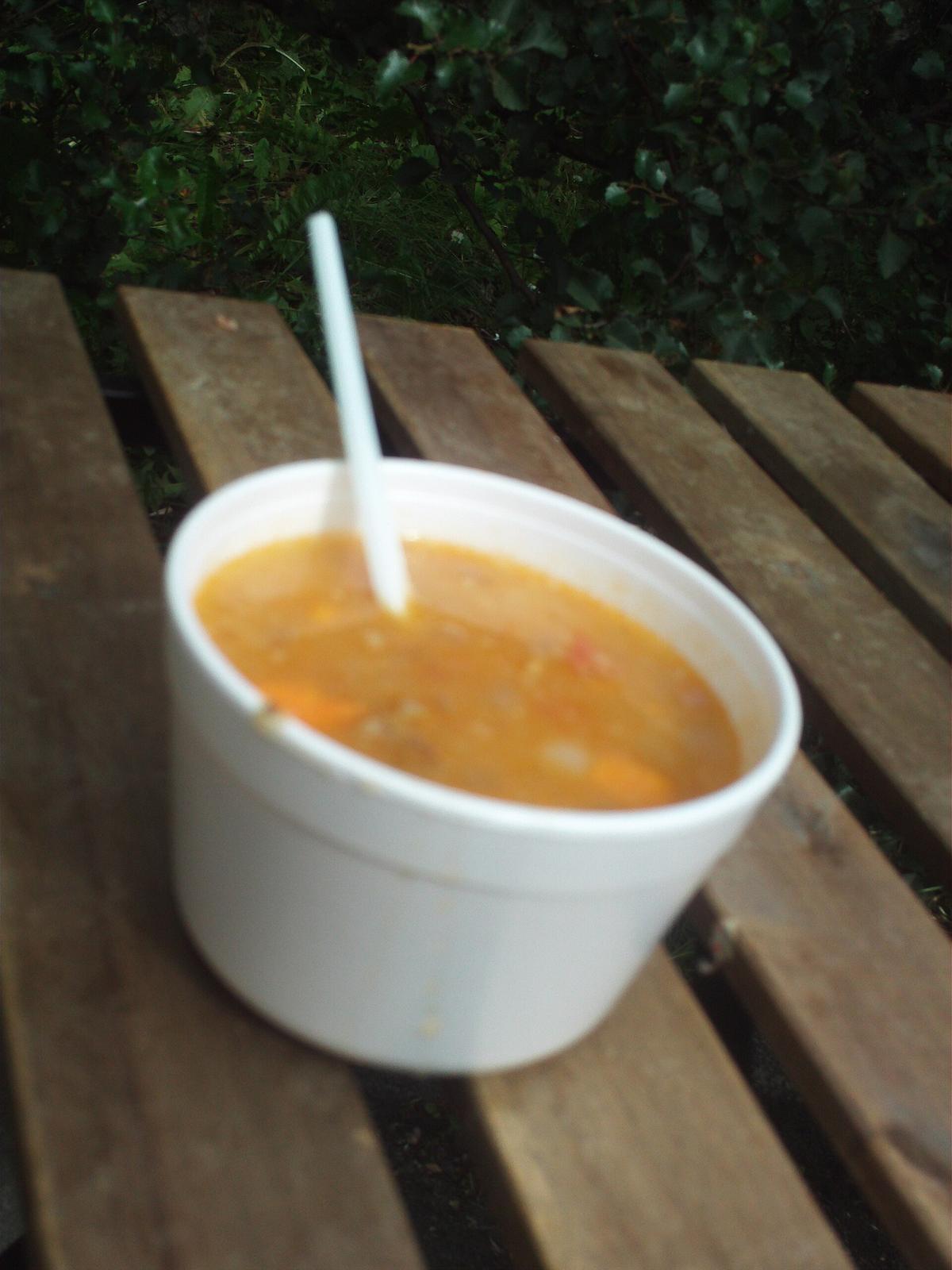
The dish to order at every station is kjötsúpa, lamb soup. It comes in a bowl with bread and butter, costs 1,500 to 2,000 ISK, and is the most reliable meal on the Ring Road. A good bowl has chunks of lamb shoulder, carrots, rutabaga, and potatoes in a clear broth that tastes of thyme and the animals grazing on volcanic grass. The real test of a petrol station stop is not the pump but the soup.
Also worth picking up: skyr cups (plain or with berries), a pylsur hot dog (around 650 to 700 ISK near Bæjarins Beztu Pylsur in Reykjavík, opened in 1937), and a bag of rye bread chips. For a quick dinner, grab a tub of plokkfiskur, a stewed fish mash with potatoes and béchamel, sold with rye bread. It is comfort food that requires no heating if you eat it same day.
Petrol stations outside towns close early or are unmanned overnight. Never let your tank drop below half. The same rule applies to food stock. If you see a station with a hot food counter open, buy something. The next one might be closed.
When Restaurant Meals Justify the Cost
Do not skip every restaurant. Three experiences are worth the 4,000 to 15,000 ISK you will spend. The rest are interchangeable and expensive.
The first is langoustine in Höfn. This small town on the southeast coast is the only place in Iceland where langoustine (hummer) is the local catch, not a frozen import. Grilled with garlic butter and served with bread and salad, a main course runs 5,000 to 6,500 ISK. Season runs May to August. Book a table by noon if you want dinner. The town has three langoustine-focused restaurants. All are good.
The second is tomato soup at Friðheimar, a geothermal greenhouse on the Golden Circle route. The soup comes in a bowl the size of your head, with fresh basil and bread. The greenhouse grows tomatoes year-round using geothermal heat. You sit surrounded by vines. This is the single best-value meal in Iceland for the quality of the setting and the food. No booking required. Arrive before 13:00 to avoid the tour-bus wave.
The third is geothermal-baked rye bread at Mývatn. Several restaurants in the area serve rúgbrauð, the dense sweet dark bread that bakeries bury in the ground near hot springs to cook for 24 hours. Eat it with butter and smoked trout. The bread alone is the reason to stop.
Skip the tourist-priced seafood restaurants in Reykjavík unless you have money to burn. Skip lamb dishes at any restaurant that does not source from a named farm. Skip whale meat entirely. It is not popular with locals and the texture is unpleasant.
The Alcohol Monopoly and Your Wallet
Alcohol above 2.25 percent ABV is sold only at state-run Vínbúðin stores. These close by 18:00 Monday to Saturday and are closed all day Sunday. A few Reykjavík locations stay open until 20:00 on Thursday and Friday. Plan ahead.
A beer at a bar costs 1,200 to 1,800 ISK. A glass of wine runs 1,800 to 2,800 ISK. A bottle of table wine from Vínbúðin costs 1,500 to 2,500 ISK. The arithmetic is obvious. Buy alcohol at duty-free in the Keflavík arrivals hall before you collect your bags. The allowance is 1 litre of spirits plus 1 litre of wine, or 3 litres of wine, plus 6 litres of beer. That supplies your entire trip if you supplement with a few bottles from Vínbúðin mid-trip.
Do not try to buy alcohol on a Sunday outside Reykjavík. You will drive to a locked Vínbúðin and spend the evening at a bar paying triple.
| Meal Type | Best Source | Price Range (ISK) | Why |
|---|---|---|---|
| Breakfast | Bónus or Krónan | 400–800 | Skyr, bread, butter, apples. 3 minutes to assemble. |
| Lunch (hot) | Petrol station | 1,500–2,000 | Kjötsúpa or plokkfiskur. No prep. Reliable. |
| Lunch (cold) | Bónus or Krónan | 600–1,200 | Bread, cheese, harðfiskur, skyr. Needs no fridge. |
| Dinner (budget) | Bónus or Krónan | 1,000–2,000 | Instant noodles, eggs, bread. Cook in hostel or campervan. |
| Dinner (worth it) | Restaurant | 4,000–6,500 | Langoustine in Höfn or tomato soup at Friðheimar. |
| Alcohol | Duty-free at KEF | Varies | 50–70% cheaper than bars. Buy before baggage claim. |

When to Use Food Halls and When to Skip
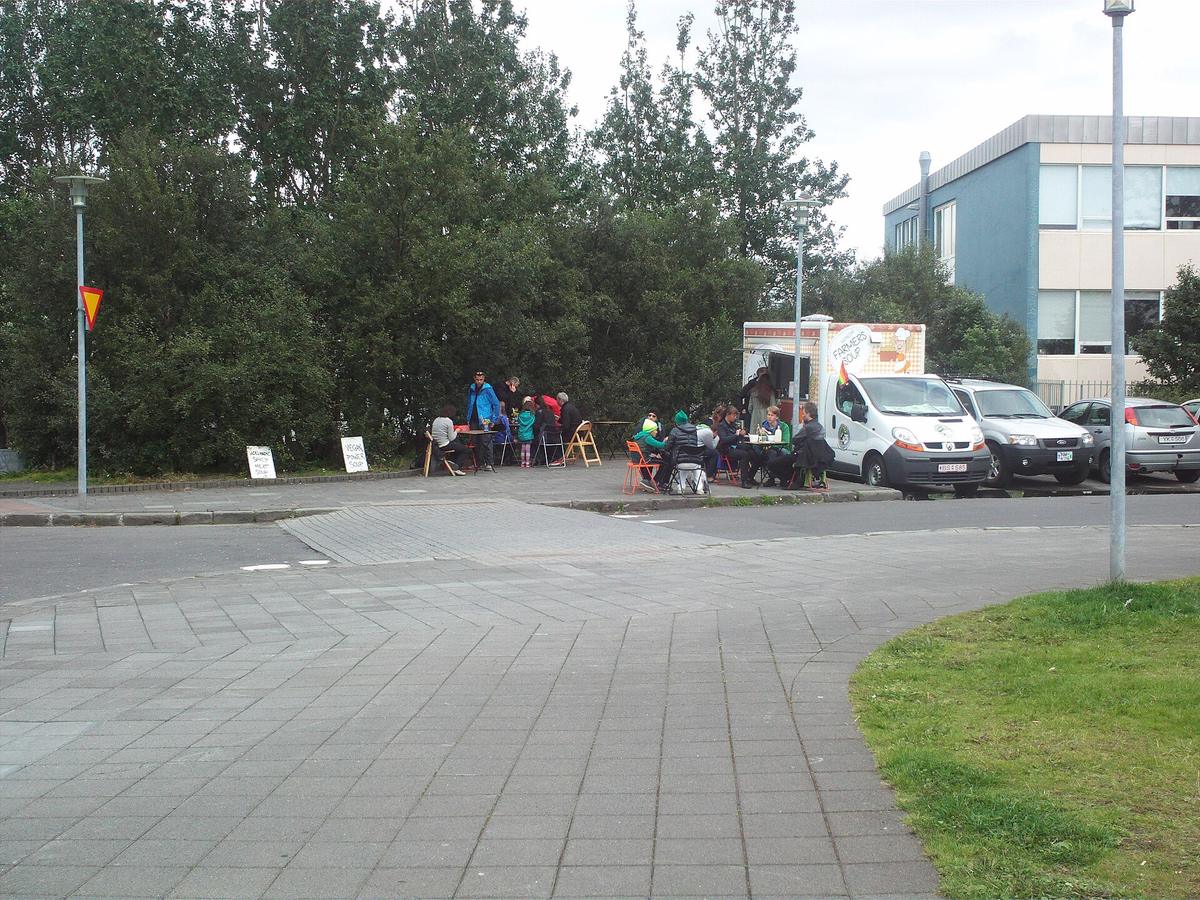
Reykjavík has three food halls: Hlemmur Mathöll, Grandi Mathöll, and Hafnartorg Gallery. Each operates as a permanent market with 8 to 12 vendors. A main course costs 2,500 to 4,500 ISK, midway between supermarket and sit-down restaurant. The quality is higher than petrol station food. The value is lower than self-catering.
Use food halls when you need a break from your own cooking and want variety in one location. Skip them if you are on a strict budget. A meal for two with drinks at Hlemmur Mathöll will cost 6,000 to 8,000 ISK. That buys three grocery hauls.
The Last Thing to Do Before You Go
Open Google Maps and pin every Bónus and Krónan on your route. Cross-reference the hours against the day of the week. Close any petrol station that is not a major brand (N1, Olís, ÓB) after 20:00. Then buy a bag of harðfiskur at the first Bónus you pass. It has the longest shelf life of any snack in your pack and it will keep you going when the next hot meal is 90 minutes away.
Common Questions
Can I buy food at the airport after landing?
Yes, but only at 10-11 or a small supermarket near the domestic terminal. Prices are 30% higher than Bónus. Instead, buy skyr cups and bread at Bónus in Reykjavík on your way out of the city.
Is street food cheap in Iceland?
There is almost no street food culture. The exception is Bæjarins Beztu Pylsur hot dog stand in Reykjavík. A pylsur with everything costs 650 to 700 ISK. That is the cheapest cooked meal you will find in the capital.
What traditional Icelandic foods are worth trying?
Skip hákarl (fermented shark) and svið (boiled sheep's head) unless you want the story. Eat skyr, lamb soup, fresh cod, and the geothermal rye bread from Mývatn. Those are the foods locals actually eat.
How do I heat food without a kitchen?
Petrol stations have hot water taps for tea. Use them to rehydrate instant noodles or instant soup. Many campsites have communal kitchens. If you are in a campervan, your vehicle has a stove. If you are renting a car, pack a thermos.
Read next
-
 Iceland Accommodation Types from Farm Stays to Hostels
A hotel in rural Iceland rarely means what it means elsewhere. The real differences between guesthouses, farm stays, hostels and campsites before you book.
Iceland Accommodation Types from Farm Stays to Hostels
A hotel in rural Iceland rarely means what it means elsewhere. The real differences between guesthouses, farm stays, hostels and campsites before you book.
-
 Where to Stay in Iceland for a Ring Road Road Trip
On an Iceland lap, the road decides where you sleep. Which bases break the Ring Road into sensible chunks, and where inventory runs dangerously low in July.
Where to Stay in Iceland for a Ring Road Road Trip
On an Iceland lap, the road decides where you sleep. Which bases break the Ring Road into sensible chunks, and where inventory runs dangerously low in July.
-
 Keflavik Airport Flights Transfers and Iceland Domestic Routes
Keflavík to Reykjavík has no train. Flybus, taxi costs, rental car pickup, and when a domestic flight from Reykjavík City Airport saves a day of driving.
Keflavik Airport Flights Transfers and Iceland Domestic Routes
Keflavík to Reykjavík has no train. Flybus, taxi costs, rental car pickup, and when a domestic flight from Reykjavík City Airport saves a day of driving.
-
 Iceland Experiences Worth Booking and Those That Depend on Weather
Some Iceland experiences vanish if you don't book weeks ahead. Silfra, ice caves, and Landmannalaugar huts sell out. Waterfalls and beaches just need you to show up.
Iceland Experiences Worth Booking and Those That Depend on Weather
Some Iceland experiences vanish if you don't book weeks ahead. Silfra, ice caves, and Landmannalaugar huts sell out. Waterfalls and beaches just need you to show up.
-
 Best Time to Visit Iceland Month by Month With Daylight Hours
Iceland changes radically by month. This calendar covers daylight hours, road openings, puffin season, northern lights windows, and the two summer weekends that book out nationwide.
Best Time to Visit Iceland Month by Month With Daylight Hours
Iceland changes radically by month. This calendar covers daylight hours, road openings, puffin season, northern lights windows, and the two summer weekends that book out nationwide.
-
 Getting Around Iceland by Car F-Roads Wind and Road.is
Driving Iceland means understanding F-road legality, reading road.is, and respecting wind that can rip a door off its hinges. This guide covers what rental agencies won't tell you.
Getting Around Iceland by Car F-Roads Wind and Road.is
Driving Iceland means understanding F-road legality, reading road.is, and respecting wind that can rip a door off its hinges. This guide covers what rental agencies won't tell you.
-
 South Iceland
How to drive Iceland's South Coast from Seljalandsfoss to Skaftafell, with honest timings, parking logistics, and the stops worth pulling over for.
South Iceland
How to drive Iceland's South Coast from Seljalandsfoss to Skaftafell, with honest timings, parking logistics, and the stops worth pulling over for.
-
 Capital Region
How to spend your arrival and departure days in Reykjavík, from the Miðborg walking loop to Vesturbær's local pools and the domestic airport at RKV.
Capital Region
How to spend your arrival and departure days in Reykjavík, from the Miðborg walking loop to Vesturbær's local pools and the domestic airport at RKV.
-
 East Iceland
How to drive Iceland's Eastfjords from Höfn to Egilsstaðir, with stops at Vestrahorn, Stuðlagil Canyon, and the puffin colony at Borgarfjörður Eystri.
East Iceland
How to drive Iceland's Eastfjords from Höfn to Egilsstaðir, with stops at Vestrahorn, Stuðlagil Canyon, and the puffin colony at Borgarfjörður Eystri.